
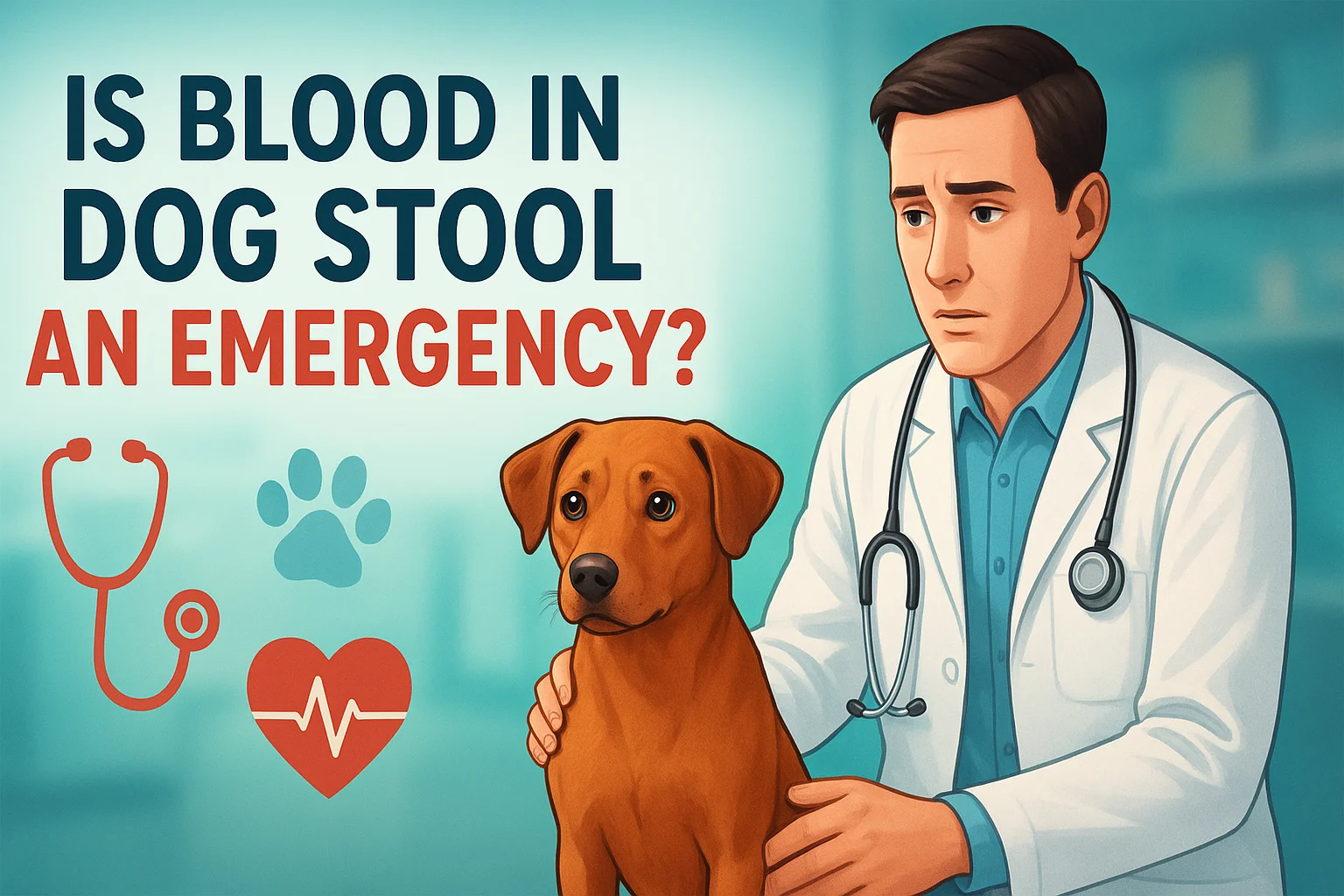
As a responsible dog parent, spotting blood in your pup’s poop can be alarming—and rightfully so. While not every case is life-threatening, bloody stool in dogs can signal serious underlying health issues that should never be ignored.
In this blog, we’ll walk you through the types of bloody stool, the most common causes, when it’s an emergency, and what to do immediately. By the end, you’ll be well-prepared to protect your dog’s health.
Types of Blood in Dog Stool: What They Mean
Understanding the appearance of the blood in your dog’s stool can help determine the severity of the issue:
🔴 Bright Red Blood (Hematochezia)
- Appears fresh and bright
- Usually seen on the surface of the stool
- Suggests bleeding in the lower digestive tract, such as the colon or rectum
⚫ Dark, Tarry Stool (Melena)

- Dark, sticky, and tar-like appearance
- Indicates digested blood from higher up in the gastrointestinal tract (like the stomach or small intestine)
- Often more serious than bright red blood
Quick Tip: Take a clear photo of your dog’s stool to show your vet—it helps with diagnosis.
Common Causes of Blood in Dog Stool
Several conditions—ranging from mild to life-threatening—can cause blood in your dog’s poop:
1. Dietary Indiscretion
Dogs are naturally curious and may eat garbage, spoiled food, or non-edible items. This can irritate the gut and lead to blood in the stool.
2. Parasites
Intestinal worms, such as hookworms, whipworms, or Giardia, can damage the intestinal lining, leading to bleeding. Puppies are especially at risk.
3. Bacterial or Viral Infections
Infections like parvovirus, salmonella, or clostridium can lead to bloody diarrhea, often accompanied by vomiting and lethargy. According to VCA Animal Hospitals, these infections can cause serious complications and must be addressed quickly.
4. Inflammatory Bowel Disease (IBD)
Chronic inflammation of the intestines can result in recurrent bloody stools and weight loss. If your dog experiences ongoing digestive issues, you might find our post on dog diarrhea at night helpful in spotting early warning signs.
5. Injuries to the Rectum
Straining during bowel movements or swallowing sharp objects (like bones or sticks) can cause rectal tears and bleeding.
6. Hemorrhagic Gastroenteritis (HGE)
A sudden and severe condition, HGE causes profuse bloody diarrhea and dehydration. It requires immediate veterinary care.
7. Cancer or Polyps
Tumors in the digestive tract may cause intermittent or chronic bleeding in the stool. The American Kennel Club also notes that older dogs are more likely to experience such issues.
So, Is Blood in Dog Stool an Emergency?
The short answer is: it depends on what else is happening with your dog.
If your dog has bright red blood but is otherwise acting normal, eating well, and has no vomiting or diarrhea, it may not be an emergency, but you still need to call your vet.
But if your dog shows any of these symptoms, seek emergency veterinary care immediately:
- Weakness or lethargy
- Vomiting
- Loss of appetite
- Signs of pain or discomfort
- Repeated bloody diarrhea
- Dehydration
💡 Important: Puppies, senior dogs, and dogs with other health issues are more vulnerable and should be seen urgently.
What to Do if You See Blood in Your Dog’s Stool
If you notice blood in your dog’s poop, follow these steps:
- Stay Calm – Don’t panic. Your reaction helps keep your dog calm, too.
- Document Symptoms – Note the color, frequency, and behavior of your dog.
- Save a Sample or Take Photos – This can help the vet diagnose faster.
- Contact Your Vet Immediately – Explain the situation clearly. They’ll guide you on the next steps.
Diagnosis & Treatment: What to Expect
When you visit the vet, they may perform:
- Fecal exam for parasites
- Blood work to check for infections or organ issues
- X-rays or ultrasound if obstruction or tumors are suspected
- Endoscopy in chronic cases
Treatment depends on the cause and may involve:
- Anti-parasitic medications
- Antibiotics
- Fluid therapy
- Dietary changes
- Surgery (in extreme cases)
Prevention Tips to Keep Your Dog’s Digestive Tract Healthy
Prevention is always better than treatment. Here’s how to lower the risk of digestive issues:
- Avoid giving your dog cooked bones or sharp chews
- Keep your dog’s environment clean and free from harmful waste
- Stay up-to-date with vaccinations and deworming
- Feed a high-quality, consistent diet
- Avoid sudden diet changes or table scraps
Final Thoughts
So, is blood in dog stool an emergency?
It can be. Even if it’s not life-threatening, it’s always worth a call to your vet. Your dog’s stool is a window into their health—don’t ignore what it’s trying to tell you.
Your quick action can make the difference between a simple treatment and a life-saving intervention.

What Vegetables Can Dogs Eat? Safe and Unsafe Vegetables
Many vegetables are safe and healthy for dogs, but some can be dangerous. Learn what vegetables dogs can eat, what they can eat daily, and
Can Dogs Eat Anchovies? Benefits, Risks, and Safe Guide
Can dogs eat anchovies safely? Discover the benefits, risks, and proper way to feed anchovies to dogs. Learn how these small fish can support your

Can Dogs Eat White Chocolate? A Complete Safety Guide
Can dogs eat white chocolate or is it dangerous? Discover the risks, symptoms of chocolate poisoning, and what to do if your dog eats white
[…] you’re unsure whether your dog’s condition is urgent, check our detailed guide on Is blood in dog stool an emergency? For step-by-step […]
Comments are closed.