Introduction
Dog owners often share their snacks with their furry friends, but not every human food is safe. One common question is: Can dogs eat almond butter? While almond butter is a nutritious treat for people, it comes with unique concerns for dogs.
This comprehensive guide explains the pros and cons of almond butter for dogs, how much is safe, when to avoid it, and what alternatives may be better. Along the way, you’ll find references to expert sources and related posts on PetDogHabits.com to keep your knowledge well-rounded.
Can Dogs Eat Almond Butter Safely?
The direct answer is: dogs can eat almond butter in very small amounts, but it isn’t the best choice. According to PetMD, almonds are not toxic in the way chocolate or grapes are, yet they can be difficult for dogs to digest.
Additionally, MasterClass emphasizes that almond butter is only safe when it is free from additives like salt, sugar, and especially xylitol, a sweetener that is extremely poisonous to dogs.
So while almond butter isn’t an automatic “no,” it is far from an ideal choice.
Nutritional Value of Almond Butter for Dogs
To decide if dogs can eat almond butter, it helps to look at the nutrients. Almonds contain:
Healthy Fats
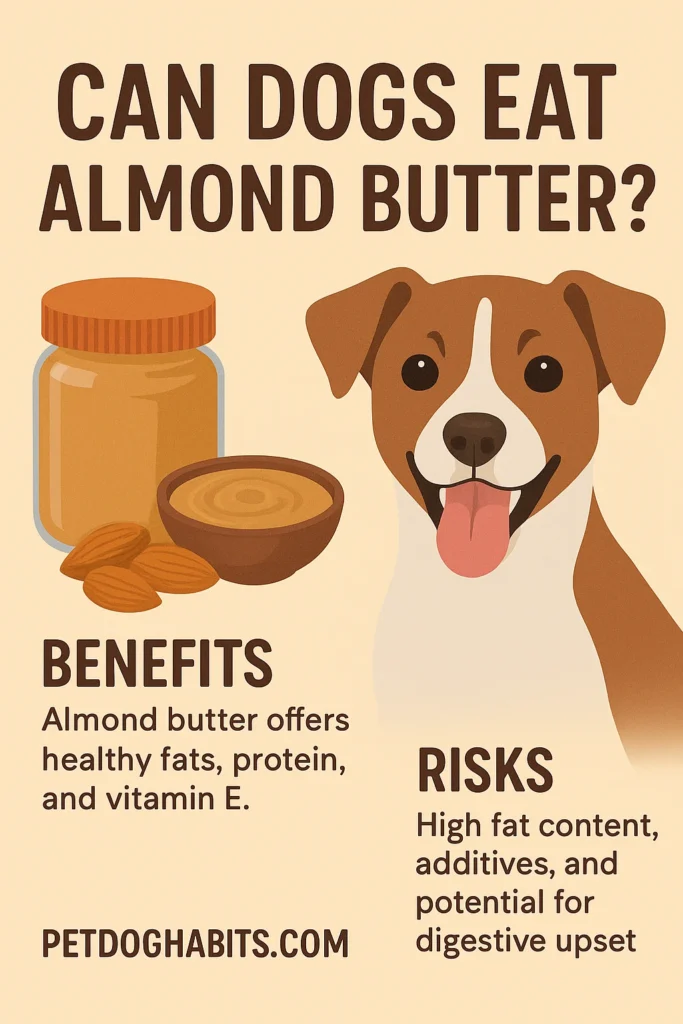
Almond butter is rich in monounsaturated fats, which are considered heart-healthy. In small doses, these fats may improve skin and coat quality in dogs.
Protein Boost
Protein helps maintain muscles and energy. While dogs already get protein from meat, a small serving of almond butter can contribute a little extra.
Vitamins and Minerals
Almonds contain vitamin E, magnesium, and fiber—all of which are beneficial to people. Dogs may get some antioxidant and digestive benefits, though these are minimal compared to proper dog food.
Bottom line: The nutritional value is real, but the risks may outweigh the benefits if not managed carefully.
Risks of Almond Butter for Dogs
Although dogs can eat almond butter in tiny amounts, the risks often overshadow the rewards.
High Fat Content
The fat in almond butter can cause digestive upset. More seriously, too much fat can trigger pancreatitis, a painful and potentially life-threatening condition.
Hidden Additives
Most commercial almond butters contain added salt, sugar, oils, or preservatives. The most dangerous additive is xylitol, which, even in small amounts, can lead to hypoglycemia or liver failure in dogs (American Dream Nut Butter).
Choking and Obstruction Risks
Whole almonds can cause choking or blockages, particularly in smaller breeds. While almond butter reduces this risk, chunks or thick textures can still be difficult to swallow.
Digestive Sensitivity
Dogs often have sensitive stomachs. Even if almond butter is plain, it may cause diarrhea, gas, or vomiting. If your dog already struggles with digestive health, avoid it altogether.
Weight Gain Concerns
Almond butter is calorie-dense. If given often, it contributes to obesity, which leads to secondary health problems.
How to Safely Feed Almond Butter to Dogs
If you still want to give your dog almond butter, follow these steps.
Choose the Right Almond Butter
Look for:
- Unsalted
- Unsweetened
- No oils or preservatives
- Absolutely no xylitol
Start with a Tiny Amount
Introduce just a small lick or ¼ teaspoon. Observe your dog for 24 hours to ensure no stomach upset.
Use It Occasionally
Treats, including almond butter, should make up less than 10% of your dog’s daily calories. Think of it as a rare indulgence, not a staple.
Best Ways to Serve
- Spread a thin layer inside a Kong toy for enrichment.
- Use it to hide pills.
- Mix a little with safe fruits like apples for a once-in-a-while snack.
When You Should Avoid Almond Butter
Sometimes the answer to “can dogs eat almond butter” is a clear “no.”
Avoid giving it if your dog:
- Has pancreatitis or a history of GI problems
- Is overweight or on a weight-loss plan
- Is a puppy under 6 months old
- Has known nut allergies
- Is on a strict veterinary diet
In these situations, almond butter does more harm than good.
Comparing Almond Butter to Other Nut Butters
Pet owners often ask not only “can dogs eat almond butter?” but also how it compares to other spreads.
Peanut Butter
Often safer if it’s unsalted and xylitol-free. A popular pill-hiding option.
Cashew Butter
Cashews are technically safer than almonds, but are still high in fat.
Sunflower Seed Butter
Lower in fat and a good alternative for dogs with nut allergies.
Butters to Avoid
Walnut, pecan, and macadamia nut butters should never be given—these nuts are toxic to dogs.
What If My Dog Ate Too Much Almond Butter?
If your dog accidentally ate a large amount, don’t panic—but act fast.
- Check the label for xylitol.
- Call your veterinarian immediately if xylitol is present.
- Watch for signs: vomiting, diarrhea, lethargy, or abdominal pain.
- Provide fresh water and withhold food for a few hours (except in very small breeds).
- Follow your vet’s instructions carefully.
Prompt action can make a big difference.
Internal Resources
For deeper insights, explore related guides on PetDogHabits.com:
These links help build authority and keep your audience engaged.
Conclusion
So, can dogs eat almond butter? The answer is yes, but with strict limitations. Almond butter is not toxic, yet its high fat content, calorie density, and risk of additives make it a questionable choice.
If you choose to give almond butter, ensure it’s plain, additive-free, and served in very small amounts. Always watch your dog for any signs of digestive upset. For most pets, occasional peanut butter or sunflower seed butter may be a safer alternative.
As with any diet decision, consult your veterinarian for tailored advice. Your dog’s health should always come first.

What Vegetables Can Dogs Eat? Safe and Unsafe Vegetables
Many vegetables are safe and healthy for dogs, but some can be dangerous. Learn what vegetables dogs can eat, what they can eat daily, and

Can Dogs Eat Anchovies? Benefits, Risks, and Safe Guide
Can dogs eat anchovies safely? Discover the benefits, risks, and proper way to feed anchovies to dogs. Learn how these small fish can support your

Can Dogs Eat White Chocolate? A Complete Safety Guide
Can dogs eat white chocolate or is it dangerous? Discover the risks, symptoms of chocolate poisoning, and what to do if your dog eats white
[…] Can Dogs Eat Almond Butter? A Complete Guide for Pet Owners […]
[…] you’re exploring other foods that go well with dog meals, you can also read about can dogs eat almond butter — another healthy treat when used […]
Comments are closed.