

When it comes to feeding your furry companion, one common question dog owners ask is, Can dogs eat wild rice? Many people consider wild rice a healthy grain alternative for humans, but before serving it to your dog, it’s important to understand how it affects their health, digestion, and energy.
In this detailed guide, you’ll discover everything about wild rice for dogs — including its benefits, risks, preparation methods, and expert feeding tips.
What Exactly Is Wild Rice?
Before answering whether dogs can eat wild rice, let’s first understand what wild rice really is. Despite its name, wild rice isn’t technically rice; it’s a seed of aquatic grass that grows naturally in lakes and rivers of North America. It’s darker, nuttier, and richer in nutrients compared to regular white rice.
Wild rice is packed with protein, fiber, vitamins, and minerals, making it one of the healthiest grains for both humans and pets when served properly. According to WildRice.com, this grain is entirely natural and free from gluten, which makes it suitable for dogs with sensitive stomachs.
Can Dogs Eat Wild Rice Safely?
Yes, dogs can eat wild rice, and it is completely safe when cooked plain and served in moderation. Wild rice is an excellent source of complex carbohydrates that provide long-lasting energy for active dogs. Moreover, it contains antioxidants that support the immune system and reduce inflammation.
However, as emphasized by Spoiled Hounds, dog owners should avoid adding any seasoning, butter, or salt because such ingredients can upset a dog’s digestive system.
So, if you’re feeding wild rice to your dog, make sure it’s boiled in water only — no spices, oil, or onion-based broths.
Nutritional Benefits of Wild Rice for Dogs
When added occasionally to your dog’s diet, wild rice offers several impressive health benefits:
1. Rich in Protein and Fiber
Wild rice contains nearly twice the protein of white rice. It helps in muscle repair and maintains a healthy coat. The high fiber content also promotes smooth digestion and prevents constipation.
2. Supports Energy and Stamina
As a complex carbohydrate, wild rice slowly releases glucose into the bloodstream, providing your dog with steady energy throughout the day.
3. Packed with Vitamins and Minerals
Wild rice contains essential nutrients like magnesium, phosphorus, and vitamin B6, which are vital for bone development and brain health.
4. Great for Sensitive Dogs
If your dog suffers from grain allergies or bloating, wild rice is a gentle alternative. It’s naturally gluten-free and easy on the stomach, as noted by CanDogsEatIt.com.
Possible Risks of Feeding Wild Rice to Dogs
Even though wild rice is healthy, moderation is crucial. Overfeeding any grain can lead to digestive discomfort. Some potential concerns include:
- Overeating: Large portions can cause bloating or weight gain.
- Raw or Undercooked Rice: Uncooked grains can be hard to digest and may lead to vomiting.
- Added Seasonings: Spices, onions, or garlic are toxic to dogs.
Always start with a small serving and observe your dog’s reaction. If they show any signs of diarrhea or discomfort, stop feeding and consult your vet.
How to Cook Wild Rice for Dogs
Preparing wild rice for your pet is simple — just keep it plain and healthy.
Steps to Prepare:
- Rinse one cup of wild rice under cold water.
- Add three cups of water to a pot and bring it to a boil.
- Add the rinsed rice and reduce the heat to a simmer.
- Cook for about 40–45 minutes until tender.
- Let it cool completely before serving to your dog.
For an extra nutrition boost, you can mix wild rice with lean chicken or boiled vegetables. Avoid adding salt or butter.
If you’re curious about feeding your dog regular rice varieties, check out this detailed article on Can Dogs Eat Rice to understand which rice type is safest for your pet.
How Much Wild Rice Can Dogs Eat?
The portion depends on your dog’s size, activity level, and overall diet.
- Small dogs: 1–2 tablespoons mixed with regular food
- Medium dogs: ¼ to ½ cup
- Large dogs: Up to 1 cup occasionally
Remember, wild rice should be treated as a supplement, not a meal replacement.
Wild Rice vs. White Rice: Which Is Better for Dogs?
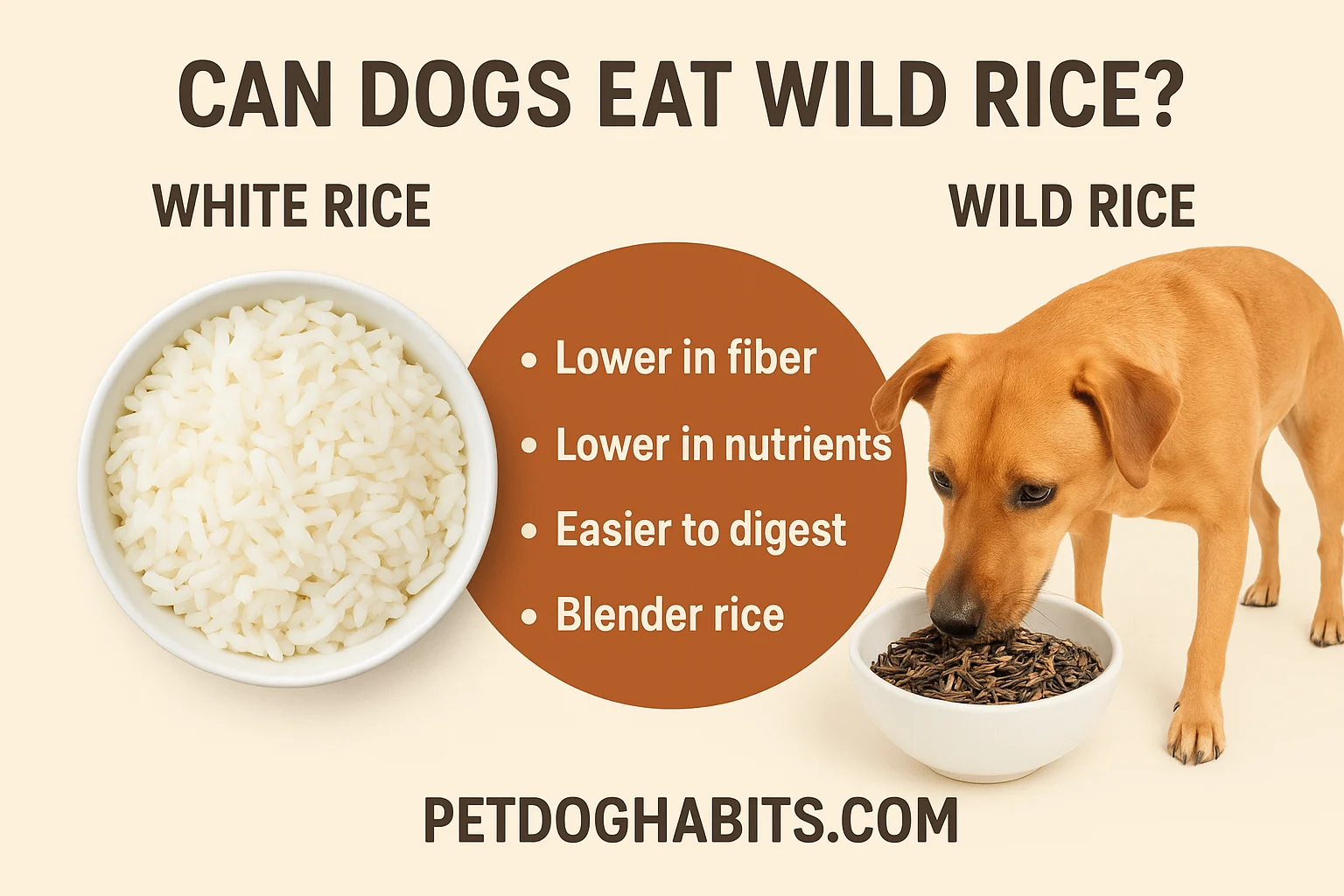
Many owners wonder whether wild rice or white rice is better for dogs. Wild rice wins in terms of nutrients and fiber, while white rice is gentler for dogs with upset stomachs.
According to WildRice.com, both can be part of a balanced canine diet, but wild rice provides more vitamins and antioxidants.
If you’re switching from white rice to wild rice, introduce it gradually to avoid digestive upset.
Tasty Ways to Serve Wild Rice to Dogs
You can make your dog’s meal both nutritious and delicious by combining wild rice with:
- Boiled chicken or turkey
- Steamed carrots or green beans
- Plain pumpkin puree
These combinations add flavor and extra nutrients without compromising safety.
If you’re exploring other foods that go well with dog meals, you can also read about can dogs eat almond butter — another healthy treat when used responsibly.
Expert Tips for Feeding Wild Rice
To keep your dog’s diet balanced and safe:
- Introduce wild rice slowly over several days.
- Always serve it fully cooked and unseasoned.
- Mix it with protein or vegetables for complete nutrition.
- Avoid feeding it daily; twice a week is sufficient.
When to Avoid Wild Rice
Although rare, some dogs may not digest grains well. Skip wild rice if your dog has:
- Grain allergies
- Chronic digestive issues
- Pancreatitis or obesity
Always consult your vet before making significant dietary changes.
Final Thoughts: Can Dogs Eat Wild Rice?
So, can dogs eat wild rice? Absolutely — when served properly, it’s one of the healthiest grains you can add to your dog’s bowl. Wild rice is a nutrient-dense, gluten-free, and energy-boosting food that supports your pet’s digestion and vitality.
Just remember: moderation and preparation are key. Serve it plain, mix it wisely, and watch your dog enjoy this wholesome treat.
For more insights on safe dog foods and nutrition tips, explore our other detailed guides on petdoghabits.com.

What Vegetables Can Dogs Eat? Safe and Unsafe Vegetables
Many vegetables are safe and healthy for dogs, but some can be dangerous. Learn what vegetables dogs can eat, what they can eat daily, and

Can Dogs Eat Anchovies? Benefits, Risks, and Safe Guide
Can dogs eat anchovies safely? Discover the benefits, risks, and proper way to feed anchovies to dogs. Learn how these small fish can support your

Can Dogs Eat White Chocolate? A Complete Safety Guide
Can dogs eat white chocolate or is it dangerous? Discover the risks, symptoms of chocolate poisoning, and what to do if your dog eats white
[…] you prefer natural, safe foods, you can explore healthy grain options in our post Can Dogs Eat Wild Rice?. It explains how wild rice can benefit dogs without harmful […]
[…] your dog already enjoys healthy snacks like wild rice or green beans, blackberries can be a refreshing fruit alternative that complements those foods […]
Comments are closed.