Can Dogs Eat Q Tips? A Serious Safety Guide Every Dog Owner
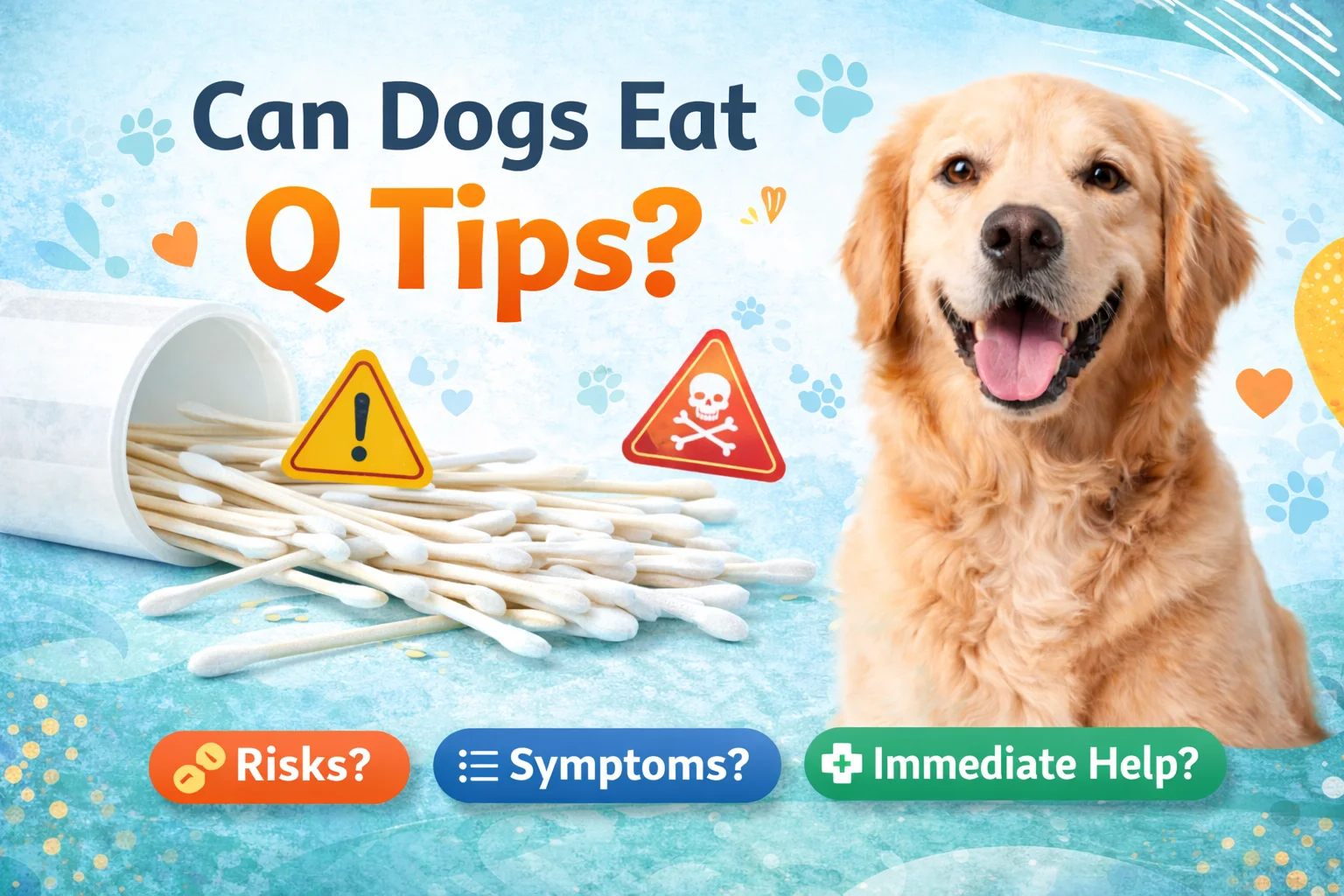
If you have ever caught your dog digging through the trash and pulling out a cotton swab, you are not alone. Many pet owners panic and immediately wonder: Can dogs eat Q-tips? The short and very clear answer is no, dogs should never eat Q-tips.
Although a cotton swab may seem small and harmless, it can pose serious health risks. In fact, swallowing a Q-tip can lead to choking, intestinal blockage, internal injury, or even emergency surgery in severe cases.
In this complete guide, you’ll learn:
- Why Q-tips are dangerous for dogs
- What happens if your dog swallows one
- Signs of intestinal blockage
- What you should do immediately
- Whether used Q-tips are more dangerous
- Safe alternatives and prevention tips
Let’s break it down carefully so you can protect your dog properly.
What Are Q-Tips Made Of?
Q-tips (cotton swabs) typically consist of:
- A small stick (plastic or paper-based)
- Cotton wrapped tightly on both ends
While cotton may seem soft and digestible, it is not designed to be eaten. Moreover, the stick inside makes the situation far more dangerous.
Unlike food, Q-tips do not break down easily inside a dog’s digestive system. Therefore, they can remain intact as they move through the stomach and intestines. When that happens, complications may quickly develop.
Why Are Q-Tips Dangerous for Dogs?
Although Q-tips look small, several risks are involved.
1. Choking Hazard
First of all, the stick can get lodged in the throat. Small dogs are especially at risk. If the swab becomes stuck in the airway, breathing can be blocked partially or completely.
2. Intestinal Blockage
More importantly, Q-tips can cause gastrointestinal obstruction. Because the stick is rigid and the cotton absorbs moisture, it may expand and get stuck inside the intestines.
An obstruction can:
- Block food movement
- Prevent normal digestion
- Cut off the blood supply to tissues
- Lead to tissue damage or rupture
In severe cases, surgery may be required.
3. Internal Damage
If the plastic stick has sharp edges or breaks, it can scratch or puncture the digestive tract. As a result, internal bleeding or infection may occur.
4. Toxic Exposure (Used Q Tips)
If the Q-tip was used to clean ears or apply makeup, additional substances may be present. For example:
- Earwax mixed with bacteria
- Cleaning chemicals
- Cosmetic residue
- Medication traces
Consequently, ingestion of used Q-tips may increase the risk of stomach irritation or toxicity.
Why Are Dogs Attracted to Q-Tips?
You may wonder why dogs even want to eat them in the first place.
Dogs are naturally curious. However, there are specific reasons Q-tips may attract them:
- Scent – Used swabs contain human earwax, which has a strong smell.
- Texture – The soft cotton feels interesting to chew.
- Trash exploration behavior – Dogs instinctively scavenge.
- Boredom or anxiety – Destructive chewing may occur when dogs are unstimulated.
Therefore, although the object itself is not food, it may seem appealing to your dog.
What Happens If a Dog Eats a Q-tip?
The outcome depends on several factors:
- The dog’s size
- Whether the swab was swallowed whole or chewed
- Type of stick (plastic vs. paper)
- Number of swabs eaten
Scenario 1: It Passes Naturally
In some cases, especially with large dogs, a single Q-tip may pass through the digestive system without causing problems. However, this cannot be guaranteed.
Scenario 2: Partial Blockage
Sometimes, mild digestive upset may develop. Symptoms may include:
- Vomiting
- Loss of appetite
- Lethargy
- Mild abdominal discomfort
Scenario 3: Complete Obstruction (Emergency)
If a blockage occurs, serious symptoms may develop quickly.
Signs of Intestinal Blockage in Dogs
You must act immediately if you notice any of the following signs:
- Repeated vomiting
- Inability to keep food or water down
- Abdominal pain (whining or guarding belly)
- Constipation or straining
- Diarrhea
- Bloated stomach
- Weakness
- Collapse
If these symptoms are observed, veterinary care should be sought immediately. Delaying treatment can make the situation life-threatening.
What Should You Do If Your Dog Eats a Q-Tip?
Stay calm but act quickly.
Step 1: Determine What Was Swallowed
- Was it one or multiple?
- Was it used?
- Did your dog chew it first?
This information will help your veterinarian.
Step 2: Do NOT Induce Vomiting Without Advice
Although inducing vomiting may seem helpful, it can be dangerous. The stick could damage the throat on the way back up.
Therefore, never give hydrogen peroxide or attempt home remedies without veterinary guidance.
Step 3: Contact Your Veterinarian
Even if your dog seems fine, it is safer to call your vet. They may recommend:
- Monitoring at home
- An examination
- X-rays
- Inducing vomiting under supervision
- Surgery (if blockage is confirmed)
Prompt action greatly improves outcomes.
Are Used Q-Tips More Dangerous?
Yes, in many cases they are.
Used swabs may contain:
- Bacteria
- Yeast
- Ear infection discharge
- Chemicals
- Cosmetic ingredients
If those substances are ingested, stomach irritation or infection may develop. Furthermore, dogs may be more attracted to used Q-tips because of the strong scent.
Therefore, used swabs should be disposed of securely.
Can Cotton Alone Harm Dogs?
You might think cotton is soft and harmless. However, cotton can clump together inside the stomach. When multiple pieces are swallowed, a dense mass may form.
Additionally, cotton absorbs liquid. As a result, it can expand and contribute to blockage.
Thus, even without the stick, cotton ingestion is not safe.
What If My Dog Ate Just the Cotton Part?
If only the cotton was eaten and the stick was discarded, the risk may be slightly lower. Nevertheless, monitoring is still required.
Watch for:
- Vomiting
- Appetite changes
- Abnormal stools
If anything unusual develops within 24–48 hours, contact your veterinarian.
Long-Term Complications of Swallowing Q-Tips
If a blockage goes untreated, serious consequences may occur:
- Intestinal rupture
- Infection (peritonitis)
- Sepsis
- Dehydration
- Death in extreme cases
Fortunately, early intervention usually leads to a good recovery.
How Veterinarians Diagnose the Problem
If you visit the clinic, your vet may perform:
- Physical examination
- Abdominal palpation
- X-rays
- Ultrasound
- Blood tests
Because cotton does not always appear clearly on X-rays, additional imaging may be required.
Treatment Options
Treatment depends on severity.
Monitoring
If no symptoms are present, careful observation may be recommended.
Induced Vomiting
If ingestion happened recently, vomiting may be safely induced under supervision.
Endoscopy
In some cases, the swab can be removed using a scope inserted through the mouth.
Surgery
If a blockage is confirmed, surgical removal may be necessary. Although surgery sounds frightening, many dogs recover fully with proper care.
How to Prevent Q-Tip Ingestion
Prevention is always better than treatment.
1. Use Secure Trash Cans
Choose trash cans with tight-fitting lids.
2. Keep Bathroom Doors Closed
Many Q tip incidents occur in bathrooms.
3. Train the “Leave It” Command
Positive reinforcement training can prevent future accidents.
4. Provide Chew Toys
If boredom is the cause, offer safe alternatives:
- Rubber chew toys
- Dental sticks
- Puzzle feeders
5. Supervise Curious Puppies
Puppies are especially prone to swallowing non-food objects.
Can Dogs Use Q-Tips for Ear Cleaning?
No. Q-tips should not be inserted into a dog’s ear canal. Doing so may:
- Push debris deeper
- Damage the eardrum
- Cause pain
Instead, use vet-approved ear cleaning solutions and cotton pads. When in doubt, ask your veterinarian to demonstrate proper technique.
When Is It an Emergency?
Seek emergency veterinary care immediately if:
- Your dog is vomiting repeatedly
- There is blood in vomit or stool
- Severe abdominal pain is observed
- Your dog becomes weak or collapses
Time matters greatly in obstruction cases.
Final Verdict: Can Dogs Eat Q-Tips?
No, dogs should never eat Q-tips.
Although they may look small and harmless, serious complications can develop. Because the risk of choking, obstruction, and internal injury exists, ingestion should always be taken seriously.
Fortunately, with quick action and preventive measures, most cases can be avoided entirely.
What do you think?
Related Articles

What Vegetables Can Dogs Eat? Safe and Unsafe Vegetables
Many vegetables are safe and healthy for dogs, but some can be dangerous. Learn what vegetables dogs can eat, what they can eat daily, and
Can Dogs Eat Anchovies? Benefits, Risks, and Safe Guide
Can dogs eat anchovies safely? Discover the benefits, risks, and proper way to feed anchovies to dogs. Learn how these small fish can support your

Can Dogs Eat White Chocolate? A Complete Safety Guide
Can dogs eat white chocolate or is it dangerous? Discover the risks, symptoms of chocolate poisoning, and what to do if your dog eats white