
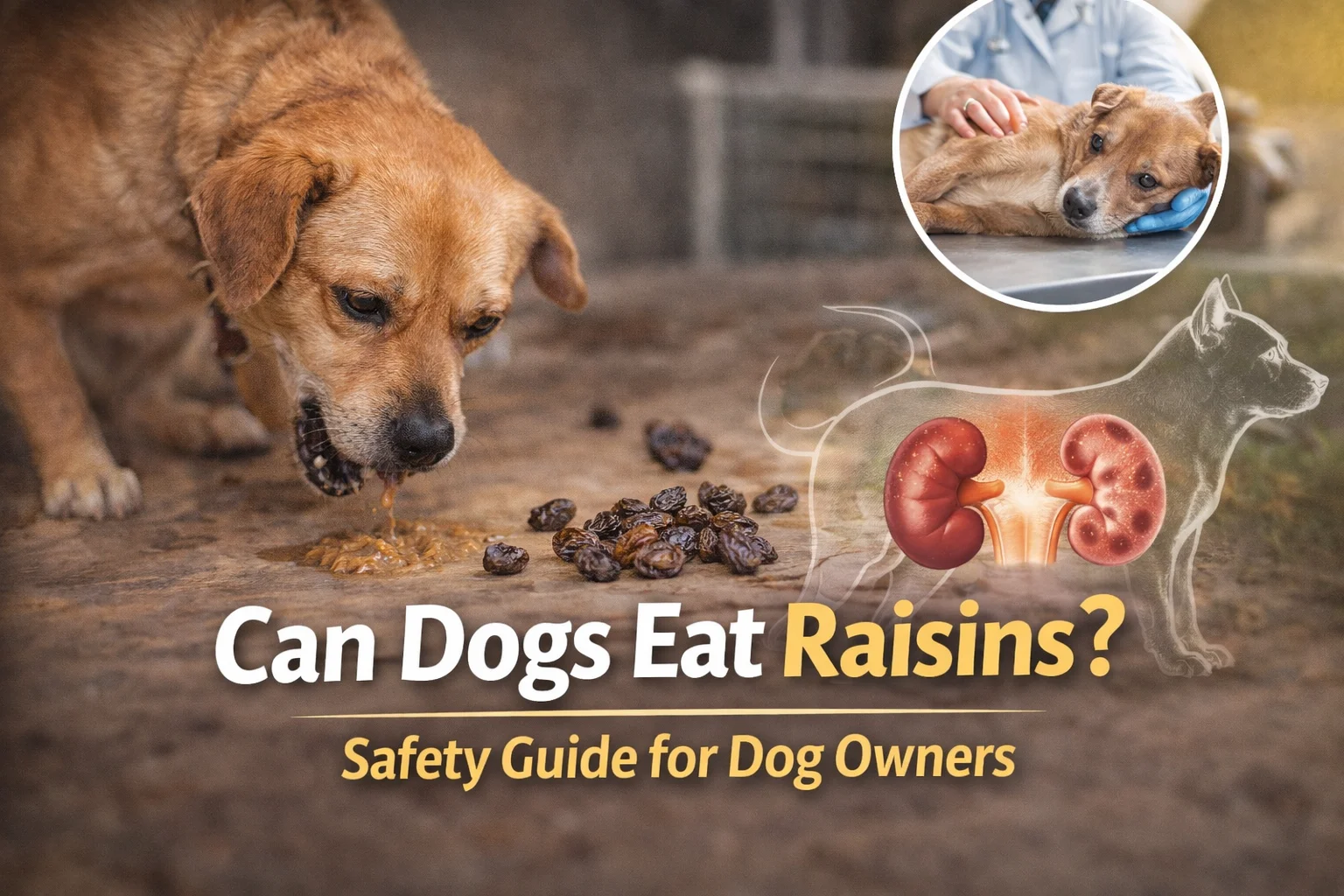
Can dogs eat raisins? Many dog owners search for this question after accidentally dropping a few raisins on the floor or sharing a snack without checking the ingredients. While raisins may seem like a small and harmless treat, they can actually be extremely dangerous for dogs. Even a tiny amount has the potential to cause serious health problems, including sudden kidney failure. Because the reaction varies from dog to dog, there is no guaranteed safe quantity. In this article, we will clearly explain why raisins are toxic, the symptoms to watch for, what to do in an emergency, and how to prevent accidental exposure in the future.
The Short Answer: No, Dogs Should Never Eat Raisins
Raisins are highly toxic to dogs. Even a small amount can cause severe kidney damage. What makes this particularly alarming is that the toxic dose varies. Some dogs may become seriously ill after eating just a few raisins, while others may eat more and show delayed symptoms.
Because of this unpredictability, there is no safe amount of raisins for dogs.
Why Are Raisins Toxic to Dogs?
Raisins are simply dried grapes, and both grapes and raisins are dangerous for dogs. Although researchers have not fully identified the exact toxic compound, studies show that ingestion can lead to acute kidney failure.
One important thing to understand:
The toxicity does not depend on the dog’s size alone. Small dogs are obviously at greater risk from smaller quantities, but large dogs can also suffer serious consequences.
What Happens Inside a Dog’s Body After Eating Raisins?
When a dog consumes raisins, the toxic substance can damage the kidneys. The kidneys are responsible for filtering waste from the blood. When they stop functioning properly, toxins build up in the body, which can become life-threatening within 24–72 hours.
This is why raisins are considered a veterinary emergency.
Symptoms of Raisin Poisoning in Dogs
Symptoms usually appear within a few hours, but in some cases, they may take longer. Watch for:
- Vomiting (often within 2–6 hours)
- Diarrhea
- Loss of appetite
- Lethargy or weakness
- Abdominal pain
- Increased thirst
- Reduced urination or no urination at all
If kidney failure develops, symptoms may worsen and include dehydration, bad breath, tremors, and collapse.
Any of these signs after raisin ingestion should be treated as urgent.
How Many Raisins Are Dangerous for Dogs?
This is where things get concerning. There is no guaranteed safe number.
Some reports suggest that as little as:
- 1–2 raisins can harm a small dog
- A handful can seriously affect a medium-sized dog
But the truth is, sensitivity varies from dog to dog. That means even a single raisin can be risky.
Because the reaction is unpredictable, veterinary professionals recommend immediate action, no matter the amount consumed.
What Should You Do If Your Dog Eats Raisins?
Do not wait for symptoms to appear.
Step 1: Call Your Veterinarian Immediately
Even if your dog seems fine, early treatment significantly improves the outcome.
Step 2: Do Not Try Home Remedies Without Guidance
Do not induce vomiting unless instructed by a veterinarian.
Step 3: Seek Emergency Care
Your vet may:
- Induce vomiting (if ingestion was recent)
- Administer activated charcoal
- Provide IV fluids to protect the kidneys
- Monitor bloodwork for 48–72 hours
The earlier treatment begins, the better the prognosis.
Are Certain Dogs More at Risk?
All dogs are at risk, but certain factors can make outcomes worse:
- Small breeds (due to lower body weight)
- Dogs with existing kidney problems
- Puppies
- Senior dogs
However, even healthy adult dogs can experience severe kidney damage.
Why Are Raisins Sometimes Hidden in Foods?
Many dog owners accidentally expose their pets to raisins through baked goods. Raisins are commonly found in:
- Cookies
- Bread
- Muffins
- Granola
- Trail mix
- Cereal
Dogs often eat these foods before owners realize they contain raisins.
Always check ingredient labels before sharing human food with your dog.
Can Dogs Eat Grapes Instead?
No. Grapes are just as toxic as raisins.
Whether fresh, dried, seedless, organic, or cooked, grapes and raisins are equally dangerous.
Safe Fruit Alternatives for Dogs

If you’re looking for healthy fruit treats, consider these safer options:
- Apples (remove seeds and core)
- Blueberries
- Bananas (in moderation)
- Watermelon (seedless and rind removed)
- Strawberries
Always introduce new foods gradually and in small portions.
Can Raisin Toxicity Be Treated Successfully?
Yes—if treated early.
Dogs that receive immediate veterinary care often recover fully. However, once kidney failure develops, treatment becomes more complicated and expensive, and the prognosis may be guarded.
Early action makes all the difference.
Long-Term Effects of Raisin Poisoning
If kidney damage is severe, a dog may experience:
- Chronic kidney disease
- Ongoing medication needs
- Dietary restrictions
- Reduced lifespan
That’s why prevention is always better than treatment.
How to Prevent Raisin Exposure
Here are practical prevention tips:
1. Keep Raisins Out of Reach
Store them in sealed containers in high cabinets.
2. Educate Family Members
Make sure children and guests know raisins are unsafe for dogs.
3. Avoid Sharing Baked Goods
Never assume a snack is safe unless you’ve checked the ingredients.
4. Train Your Dog
Teaching commands like “leave it” can prevent accidental ingestion.
5. Clean Spills Immediately
Raisins are small and easy to miss on the floor.
Common Questions About Dogs and Raisins
Can one raisin kill a dog?
In some cases, yes. Because toxicity varies, even a single raisin can potentially cause serious harm.
What if my dog ate raisins but seems fine?
Call your veterinarian immediately. Symptoms may be delayed.
Are cooked raisins less toxic?
No. Cooking does not remove the toxic effect.
Are raisin-flavored foods safe?
Artificial raisin flavoring may not be toxic, but you should verify ingredients carefully.
Final Verdict: Raisins Are Never Safe for Dogs
When it comes to raisins, the safest approach is simple—zero tolerance.
Unlike other human foods that may only cause mild stomach upset, raisins can cause life-threatening kidney failure. The risk is unpredictable, and the consequences can be severe.
If your dog eats raisins, treat it as an emergency. Quick veterinary care can save your dog’s life.
Your dog depends on you to keep them safe. A small precaution today can prevent a serious health crisis tomorrow.

What Vegetables Can Dogs Eat? Safe and Unsafe Vegetables
Many vegetables are safe and healthy for dogs, but some can be dangerous. Learn what vegetables dogs can eat, what they can eat daily, and

Can Dogs Eat Anchovies? Benefits, Risks, and Safe Guide
Can dogs eat anchovies safely? Discover the benefits, risks, and proper way to feed anchovies to dogs. Learn how these small fish can support your

Can Dogs Eat White Chocolate? A Complete Safety Guide
Can dogs eat white chocolate or is it dangerous? Discover the risks, symptoms of chocolate poisoning, and what to do if your dog eats white