

Mango’s golden flesh, juicy sweetness, and tropical aroma make it one of the most loved fruits worldwide. When you slice one, your dog may hover close by, tail wagging and eyes hopeful. But as a responsible pet parent, you might wonder: can dogs eat mango safely, or is it better to keep this fruit for yourself?
The good news is that mango can be a healthy, occasional treat—if prepared correctly and served in moderation. This comprehensive guide explains the nutritional perks, possible hazards, safe serving methods, and fun recipe ideas so your dog can enjoy mango without risk.
Why Owners Ask “Can Dogs Eat Mango?”
Dogs are naturally curious about new foods, especially when they smell something sweet. Mango contains natural sugars, a fibrous texture, and a tempting scent, making it highly appealing. However, the fruit also hides a large, hard pit and a tough skin. Because of those factors, owners rightly pause and question whether mango is safe.
Nutritional Profile of Mango
Below is a quick look at what one cup (165 g) of fresh mango provides and how each nutrient benefits dogs:
| Nutrient | Amount in 1 Cup | Potential Canine Benefit |
| Vitamin A | ~1,800 IU | Supports vision, skin health, immune function |
| Vitamin C | ~60 mg | Antioxidant protection, joint support |
| Vitamin B6 | ~0.2 mg | Nervous system and brain health |
| Vitamin E | ~1.5 mg | Skin and coat protection |
| Fiber | ~2.6 g | Aids digestion, promotes fullness |
| Potassium | ~277 mg | Regulates muscle contractions and heart rhythm |
These nutrients make mango more than a sweet snack—it can be a natural boost to your dog’s overall health when fed responsibly.
Health Benefits of Mango for Dogs
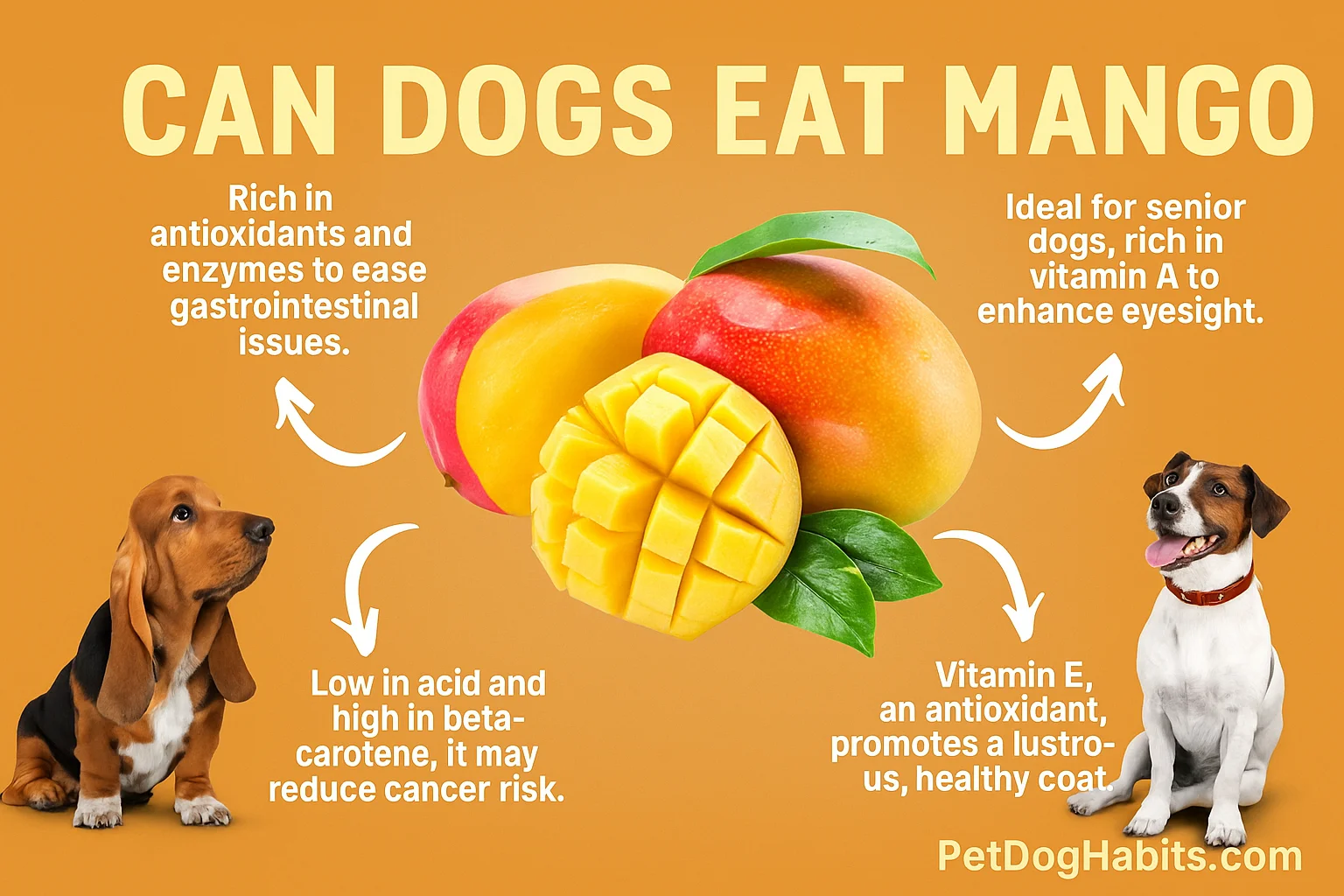
- Immune Support – Antioxidants such as vitamin C and beta-carotene help neutralize free radicals.
- Skin & Coat Health – Vitamins A and E promote cell repair and a shiny coat.
- Digestive Aid – Dietary fiber supports regular bowel movements.
- Hydration – Mango’s high water content provides extra fluids on hot days.
Tip: Benefits appear only when mango is used as a treat. It should never be used as a replacement for balanced dog food.
Risks and Precautions
Although mango is nutritious, it carries several hazards:
| Risk | Details & Why It Matters |
| Pit/Seed | The large pit can choke a dog or cause an intestinal blockage and contains trace cyanide compounds. |
| Skin | Tough to digest; may irritate sensitive stomachs or contain pesticide residue. |
| Sugar Content | Excess sugar may trigger weight gain or spike blood sugar—dangerous for dogs with diabetes or obesity. |
| Possible Allergies | Some dogs experience diarrhea or vomiting when first trying mango. |
Veterinary experts at the American Kennel Club recommend always peeling, pitting, and limiting the portion.
Preparing Mango the Safe Way
Follow these steps every time:
- Wash Thoroughly – Removes dirt and pesticides.
- Peel completely – Discard all skin.
- Remove the Pit – Ensure no seed fragments remain.
- Dice into Cubes – Bite-sized pieces reduce choking risk.
- Serve Fresh or Frozen – Avoid dried or syrupy mango products, which are too sugary.
Portion Guide by Dog Size
How much mango is safe depends on your dog’s weight and daily calorie needs.
Use this table as a general guide:
| Dog Size | Suggested Portion | Frequency |
| Extra-small (<10 lbs) | 1–2 small cubes | Once a week |
| Small (10–25 lbs) | 2–3 cubes | 1–2 times per week |
| Medium (25–50 lbs) | 4–5 cubes | 1–2 times per week |
| Large (50+ lbs) | Small handful | 1–2 times per week |
Treats, including fruit, should never account for more than 10% of total daily calories.
When Mango Should Be Avoided
Skip or severely limit mango if your dog:
- Has diabetes or is prone to obesity.
- Suffers from pancreatitis, where extra sugar and fat can trigger flare-ups.
- It is a young puppy with a still-developing digestive system.
- Shows any sign of allergy—vomiting, diarrhea, or itchy skin.
If symptoms appear, contact your veterinarian immediately.
Creative Ways to Serve Mango
Add variety so your dog doesn’t just eat plain cubes:
- Frozen Mango Cubes – Perfect for a cooling summer snack.
- Mango & Yogurt Pup-Sicles – Blend mango with plain unsweetened yogurt, pour into molds, and freeze.
- Mango Puree Topper – Mash a spoonful and swirl it into regular dog food for a nutrient boost.
- Stuffed Kong – Mix mashed mango with a little peanut butter and freeze it inside a chew toy.
These methods keep treats exciting while controlling portion sizes.
Comparisons with Other Dog-Safe Fruits
If you enjoy sharing fruit, you can rotate mango with other safe options. For example:
- Watermelon is hydrating and low in calories—learn more in our guide on dogs and watermelon.
- Peaches provide vitamins A and C but also require pit removal; see our article on dogs and peaches.
- Eggplant, though not sweet, offers fiber and antioxidants—discover safe preparation in our post on dogs and eggplant.
These internal resources help readers explore other nutritious treats.
Frequently Asked Questions
No. Dried mango is concentrated in sugar and sometimes contains preservatives.
Yes, vitamins A and E support skin cell renewal and shine.
Only small amounts of fresh, unsweetened puree. Store-bought juices often include added sugar or xylitol, which is toxic.
Key Takeaways
- Yes, dogs can eat mango as an occasional treat.
- Always peel, pit, and cut the fruit into small pieces.
- Feed in moderation—treats must stay under 10% of daily calories.
- Watch for signs of allergy or digestive upset, and consult your vet with any concerns.
Final Thoughts
Sharing fruit with your dog can be a joyful bonding experience. By following the simple safety steps outlined here, you can let your pet enjoy the tropical sweetness of mango while keeping them healthy and happy. With its rich vitamins, fiber, and antioxidants, mango makes a colorful addition to your dog’s treat menu—just remember that moderation and preparation are the keys to keeping this tropical indulgence safe.

What Vegetables Can Dogs Eat? Safe and Unsafe Vegetables
Many vegetables are safe and healthy for dogs, but some can be dangerous. Learn what vegetables dogs can eat, what they can eat daily, and

Can Dogs Eat Anchovies? Benefits, Risks, and Safe Guide
Can dogs eat anchovies safely? Discover the benefits, risks, and proper way to feed anchovies to dogs. Learn how these small fish can support your

Can Dogs Eat White Chocolate? A Complete Safety Guide
Can dogs eat white chocolate or is it dangerous? Discover the risks, symptoms of chocolate poisoning, and what to do if your dog eats white
[…] Our guide on can dogs eat mango? Healthy treat guide for your pet […]
Comments are closed.