Can Dogs Eat Nutella?
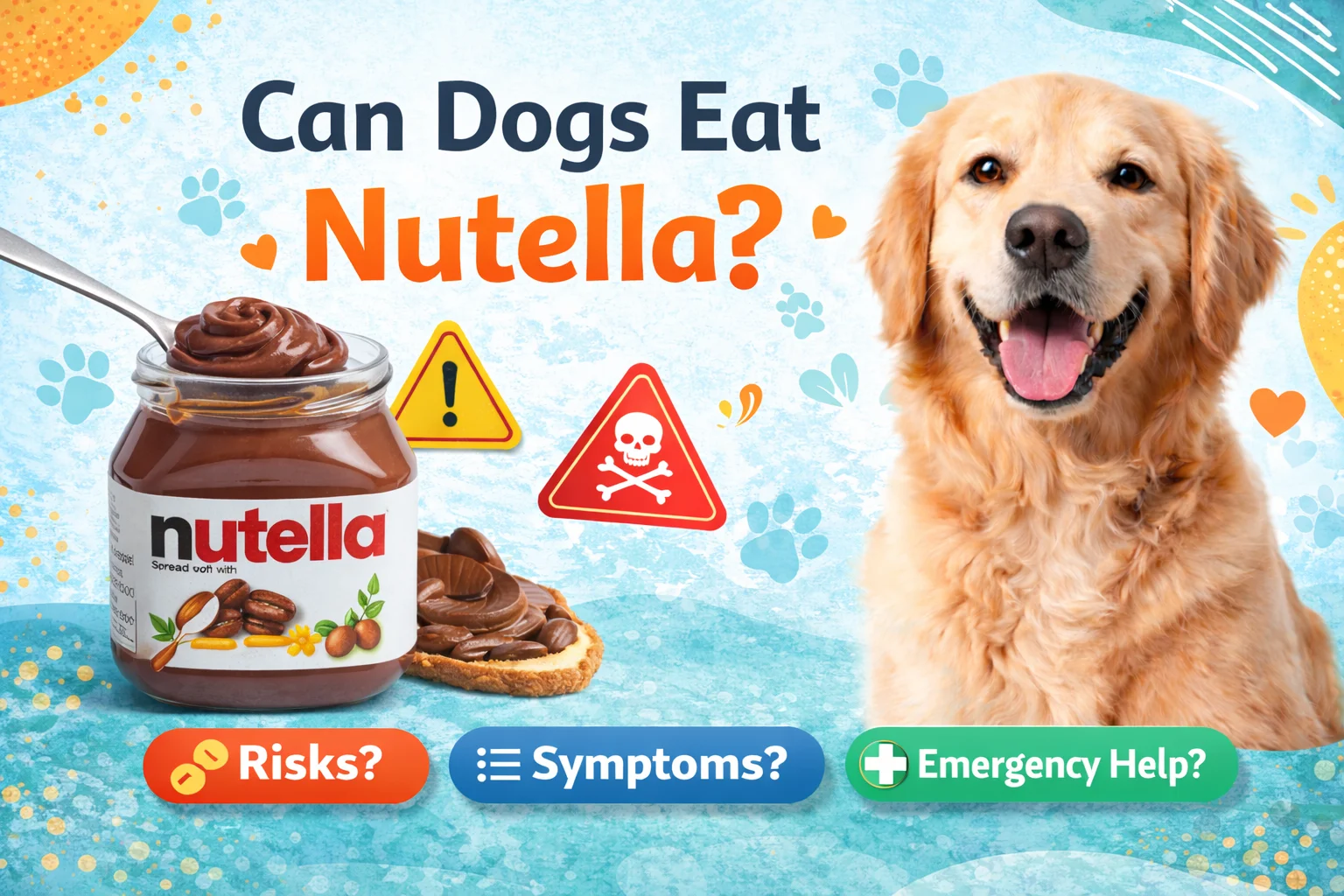
If you have ever enjoyed a spoonful of chocolate-hazelnut spread while your dog stared at you with hopeful eyes, you may have wondered: Can dogs eat Nutella?
Although it may seem harmless in small amounts, the truthful answer is no, dogs should not eat Nutella. While it is not as instantly dangerous as pure dark chocolate, Nutella contains ingredients that can harm your dog’s health. Therefore, even a small serving should be avoided.
In this comprehensive guide, you will learn:
- Why Nutella is unsafe for dogs
- Which ingredients are harmful
- What happens if your dog eats Nutella
- Symptoms of chocolate toxicity
- What to do in an emergency
- Safer alternatives you can offer instead
Let’s explore everything carefully so you can protect your furry companion.
What Is Nutella Made Of?
To understand the risks, we must first examine the ingredients. Nutella typically contains:
- Sugar
- Palm oil
- Hazelnuts
- Cocoa (chocolate)
- Milk powder
- Emulsifiers and flavorings
Although hazelnuts alone are not highly toxic to dogs, the combination of chocolate and sugar makes this spread unsafe.
In addition, Nutella is extremely high in fat and calories. Consequently, even a moderate amount may upset your dog’s stomach.
Why Is Nutella Dangerous for Dogs?
Nutella poses risks for several reasons. Each ingredient contributes to the problem.
1. Chocolate Content
Chocolate contains theobromine, a compound that dogs cannot metabolize efficiently. As a result, theobromine can build up in their system and cause toxicity.
Although Nutella contains less cocoa than dark chocolate, it still contains enough to cause concern, especially for small dogs.
2. High Sugar Levels
Nutella is loaded with sugar. While sugar is not immediately toxic, it can lead to:
- Stomach upset
- Obesity
- Diabetes
- Dental issues
If given regularly, sugary foods can seriously damage a dog’s long-term health.
3. High Fat Content
Because Nutella contains palm oil and nuts, it is very high in fat. Excess fat intake may lead to:
- Vomiting
- Diarrhea
- Pancreatitis
Pancreatitis, in particular, can become life-threatening if untreated.
4. Possible Xylitol Risk (In Some Products)
While traditional Nutella does not contain xylitol, certain chocolate spreads or imitation brands may include this artificial sweetener. Xylitol is extremely toxic to dogs and can cause sudden blood sugar drops and liver failure.
Therefore, labels should always be checked carefully.
How Much Nutella Is Dangerous for Dogs?
The level of danger depends on:
- The dog’s weight
- Amount consumed
- Cocoa concentration
- Overall health condition
A large dog that licks a small smear may experience only mild stomach upset. However, a small dog that eats several tablespoons could face serious consequences.
Because it is difficult to calculate toxicity accurately at home, contacting a veterinarian is always recommended if a significant amount was consumed.
Symptoms of Nutella or Chocolate Toxicity in Dogs
Symptoms may appear within 2 to 12 hours after ingestion.
Watch for:
- Vomiting
- Diarrhea
- Restlessness
- Rapid heart rate
- Excessive thirst
- Panting
- Tremors
- Muscle stiffness
- Seizures
In severe cases, collapse may occur.
If any of these symptoms develop, emergency veterinary care should be sought immediately.
What Should You Do If Your Dog Eats Nutella?
First, remain calm. Then follow these steps.
Step 1: Estimate the Amount
Determine how much was eaten and your dog’s approximate weight.
Step 2: Check the Ingredients
Confirm whether the product contains xylitol.
Step 3: Call Your Veterinarian
Even if your dog seems fine initially, calling your vet is the safest choice. They may recommend:
- Monitoring at home
- Bringing your dog in for evaluation
- Inducing vomiting (professionally)
- Activated charcoal treatment
Never attempt to induce vomiting without professional advice.
Can Nutella Cause Pancreatitis?
Yes, it can.
Because Nutella is high in fat, it may trigger pancreatitis, especially in dogs that:
- Are overweight
- Have a history of digestive issues
- Are sensitive to fatty foods
Symptoms of pancreatitis include:
- Severe abdominal pain
- Repeated vomiting
- Loss of appetite
- Lethargy
Pancreatitis can require hospitalization and supportive care. Therefore, fatty treats should always be avoided.
Are Hazelnuts Safe for Dogs?
Plain hazelnuts are not highly toxic. However, they are:
- High in fat
- Hard to digest
- Potential choking hazards
Moreover, moldy nuts can contain extremely dangerous aflatoxins. For these reasons, nuts should not be a regular part of your dog’s diet.
Can Puppies Eat Nutella?
No. Puppies are even more sensitive to sugar and fat. Because their bodies are smaller, toxic amounts can affect them more quickly.
Additionally, early exposure to sugary foods may disrupt healthy eating habits.
What Happens If a Dog Eats a Large Amount of Nutella?
If a dog consumes a large quantity, several complications may develop:
- Chocolate toxicity
- Severe digestive upset
- Pancreatitis
- Dehydration
- Elevated heart rate
In such cases, hospitalization may be required for:
- IV fluids
- Heart monitoring
- Medication
- Supportive therapy
Fortunately, with prompt treatment, recovery is often successful.
Why Dogs Should Not Eat Sugary Spreads
Even beyond toxicity, sugary spreads are harmful because they:
- Provide empty calories
- Increase obesity risk
- Contribute to joint problems
- Raise diabetes risk
Dogs thrive on balanced nutrition designed specifically for their needs. Human desserts simply do not fit into a healthy canine diet.
Safer Alternatives to Nutella for Dogs
If you want to share a treat safely, consider these options instead:
1. Dog-Safe Peanut Butter
Choose unsalted peanut butter with no xylitol.
2. Plain Pumpkin Puree
This supports digestion and contains fiber.
3. Small Apple Slices (Seed-Free)
Apples are refreshing and low in fat.
4. Blueberries
These provide antioxidants.
5. Commercial Dog Treats
Select vet-approved, balanced treats.
By choosing safe alternatives, you can satisfy your dog without risking their health.
How to Prevent Accidental Ingestion
Prevention is always easier than treatment.
- Store Nutella in sealed cabinets
- Keep countertops clean
- Supervise dogs in the kitchen
- Teach the “leave it” command
- Avoid leaving jars unattended
Because dogs are naturally curious, proper storage is essential.
Common Myths About Dogs and Nutella
Myth 1: “It’s Only a Little Chocolate.”
Even small amounts can cause problems, especially in small dogs.
Myth 2: “Milk Chocolate Isn’t Dangerous.”
Although milk chocolate is less concentrated than dark chocolate, it still contains theobromine.
Myth 3: “My Dog Ate It Before and Was Fine.”
Each exposure is different. Past tolerance does not guarantee future safety.
Long-Term Effects of Feeding Nutella Regularly
Repeated exposure to sugary, fatty foods may lead to:
- Obesity
- Chronic digestive issues
- Pancreatitis
- Diabetes
- Reduced lifespan
Therefore, Nutella should never become a routine treat.
When Is It an Emergency?
Seek emergency care if:
- Large amounts were consumed
- Tremors or seizures occur
- Heart rate increases dramatically
- Severe vomiting persists
- Your dog collapses
Acting quickly can prevent complications.
Final Verdict: Can Dogs Eat Nutella?
No, dogs should not eat Nutella.
Although a tiny lick may not cause severe toxicity, the presence of chocolate, high sugar, and excessive fat makes it unsafe. Furthermore, regular exposure can lead to serious health problems over time.
Because safer alternatives exist, there is simply no reason to risk your dog’s well-being.
What do you think?
Related Articles

What Vegetables Can Dogs Eat? Safe and Unsafe Vegetables
Many vegetables are safe and healthy for dogs, but some can be dangerous. Learn what vegetables dogs can eat, what they can eat daily, and
Can Dogs Eat Anchovies? Benefits, Risks, and Safe Guide
Can dogs eat anchovies safely? Discover the benefits, risks, and proper way to feed anchovies to dogs. Learn how these small fish can support your
Can Dogs Eat White Chocolate? A Complete Safety Guide
Can dogs eat white chocolate or is it dangerous? Discover the risks, symptoms of chocolate poisoning, and what to do if your dog eats white