

Many dog owners love the tangy crunch of sauerkraut and wonder: Can dogs eat sauerkraut safely, or is it a food to avoid?
This in-depth guide explains the health benefits, potential risks, and step-by-step instructions for introducing sauerkraut to your dog’s diet.
You will also find expert resources, related healthy-food links, and veterinarian-backed advice that outperforms typical competitor articles.
What Is Sauerkraut and Why People Feed It to Dogs
Sauerkraut is simply fermented cabbage.
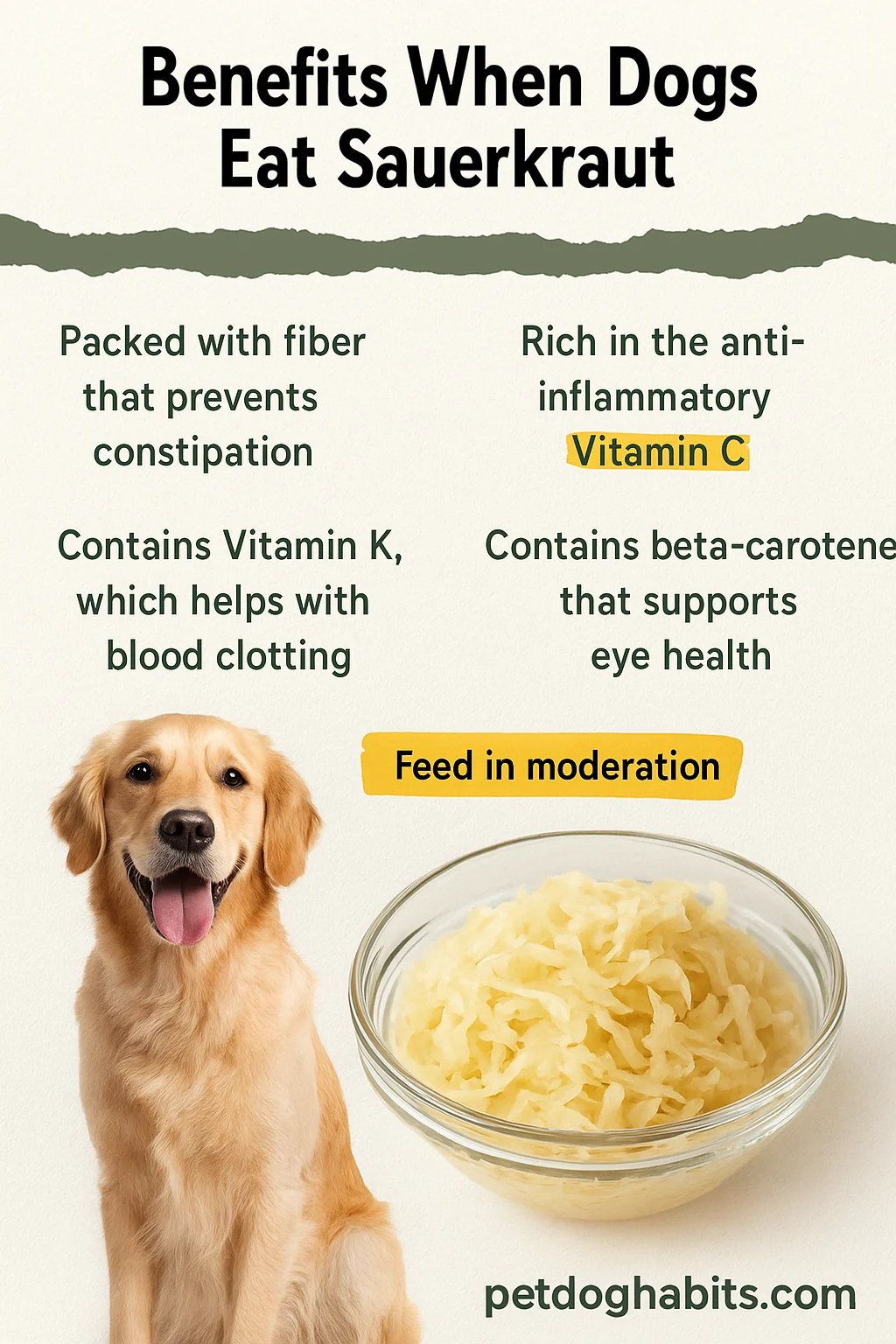
During fermentation, healthy lactic acid bacteria create probiotics and preserve nutrients such as vitamin C, vitamin K, iron, and fiber.
Because probiotics help maintain a balanced gut, many pet owners believe that dogs can eat sauerkraut as a natural digestive supplement.
Some pet-care experts, including those at the Front of the Pack guide, highlight its potential immune-supporting properties.
Can Dogs Eat Sauerkraut for Probiotic Benefits
Yes, dogs can enjoy plain sauerkraut in moderation because the live cultures may aid digestion and strengthen the immune system.
The probiotics produced during fermentation can reduce occasional diarrhea and help maintain a healthy intestinal lining.
These benefits are similar to the natural probiotics discussed in the LolaHemp sauerkraut for dogs guide, but here we also explore serving sizes and safety checks in more detail.
Key Nutritional Advantages
- Gut health support through active probiotics
- Antioxidants and vitamins that contribute to strong immunity and bone health
- Dietary fiber that aids normal bowel movement and reduces constipation
According to the Doggy’s Digest article, these nutrients can help maintain skin health and vitality.
However, those benefits appear only when sauerkraut is served in small, carefully measured portions.
Risks When Dogs Eat Sauerkraut
While the answer to can dogs eat sauerkraut is generally yes, several risks require attention:
- High sodium content in most store-bought products can strain the heart and kidneys.
- Toxic additives such as garlic or onion are dangerous for dogs.
- Digestive upset may occur if too much is served too quickly.
- Histamine sensitivity can trigger allergic reactions or itchy skin.
These concerns highlight the importance of gradual introduction and portion control.
How to Introduce Sauerkraut Safely
Start small and observe.
Offer a teaspoon for small breeds or up to a tablespoon for large dogs, mixed with their regular meal.
Watch for gas, soft stool, or vomiting for at least 24 hours before serving again.
Rinsing store-bought sauerkraut under cold water lowers the sodium and makes it safer.
| Dog Size | Starting Portion | Frequency |
|---|---|---|
| Small (under 20 lb) | ½ teaspoon | Two–three times a week |
| Medium (20–50 lb) | 1 teaspoon | Two to four times a week |
| Large (50 lb+) | 1 tablespoon | Two–four times a week |
These serving ideas keep salt intake manageable while providing probiotic benefits.
When to Avoid Sauerkraut Entirely
Skip sauerkraut if your dog has kidney disease, heart disease, or is on a sodium-restricted diet.
Puppies with sensitive digestive systems and dogs that have had adverse reactions to fermented foods should also avoid it.
Healthy Alternatives to Sauerkraut
If your dog cannot tolerate fermented cabbage, consider unsweetened yogurt, plain kefir, or vet-approved canine probiotic supplements.
These foods provide similar gut-friendly bacteria without the high salt content.
Related Foods Dogs Can or Cannot Eat
Interested in other human foods for pets?
You may want to learn about aloe vera safety for dogs and discover whether dogs can eat mango.
Both articles explain how to introduce new foods safely and give helpful serving tips, just like this sauerkraut guide.
Final Verdict on Can Dogs Eat Sauerkraut
So, can dogs eat sauerkraut?
Yes—if it is plain, unsalted, and given in small amounts, sauerkraut can be a healthy occasional treat that supports digestive health.
Always rinse store-bought varieties, introduce them gradually, and monitor for any signs of discomfort.
Consult your veterinarian if your dog has pre-existing medical conditions or shows adverse reactions.
When served responsibly, sauerkraut can be a flavorful, probiotic-rich addition to your dog’s diet, offering benefits that rival commercial supplements and helping maintain a balanced gut.

What Vegetables Can Dogs Eat? Safe and Unsafe Vegetables
Many vegetables are safe and healthy for dogs, but some can be dangerous. Learn what vegetables dogs can eat, what they can eat daily, and

Can Dogs Eat Anchovies? Benefits, Risks, and Safe Guide
Can dogs eat anchovies safely? Discover the benefits, risks, and proper way to feed anchovies to dogs. Learn how these small fish can support your

Can Dogs Eat White Chocolate? A Complete Safety Guide
Can dogs eat white chocolate or is it dangerous? Discover the risks, symptoms of chocolate poisoning, and what to do if your dog eats white
[…] Can Dogs Eat Sauerkraut? Benefits, Risks & Feeding Guide — offers a framework for assessing unusual foods and what to watch for. […]
Comments are closed.