

When you notice your dog limping on a back leg, it can be both alarming and heartbreaking. Dogs rely on their hind legs for balance, mobility, and play, so any sudden change in movement often signals discomfort or injury. Although limping may seem minor, it’s important not to ignore it. Even a subtle limp can indicate a more serious condition, such as joint disease or a torn ligament.
In this guide, we’ll cover common causes of dog back-leg limping, first-aid steps to take at home, when to call your veterinarian, and treatment options to help your furry friend recover quickly.
Understanding Why Dogs Limp on a Back Leg
“Dog limping back leg” is a term pet parents often search for when their pup begins to favor one side. Limping—also called lameness—is your dog’s way of signaling pain or weakness in their hind limbs. This could stem from something as simple as a thorn in their paw or as complex as a neurological condition.
To better understand why limping happens, let’s quickly review the anatomy of your dog’s hind leg:
- Femur (thigh bone) – Connects the hip to the knee joint (stifle).
- Tibia and Fibula (shin bones) – Support weight and movement.
- Stifle (knee joint) – Stabilized by ligaments like the cranial cruciate ligament (CCL).
- Hock (ankle joint) – A key joint for flexibility and propulsion.
- Muscles, tendons, and nerves – Provide strength and coordination.
Any disruption in these areas—whether from injury, inflammation, or disease—can result in limping.
First-Aid Steps for a Limping Dog
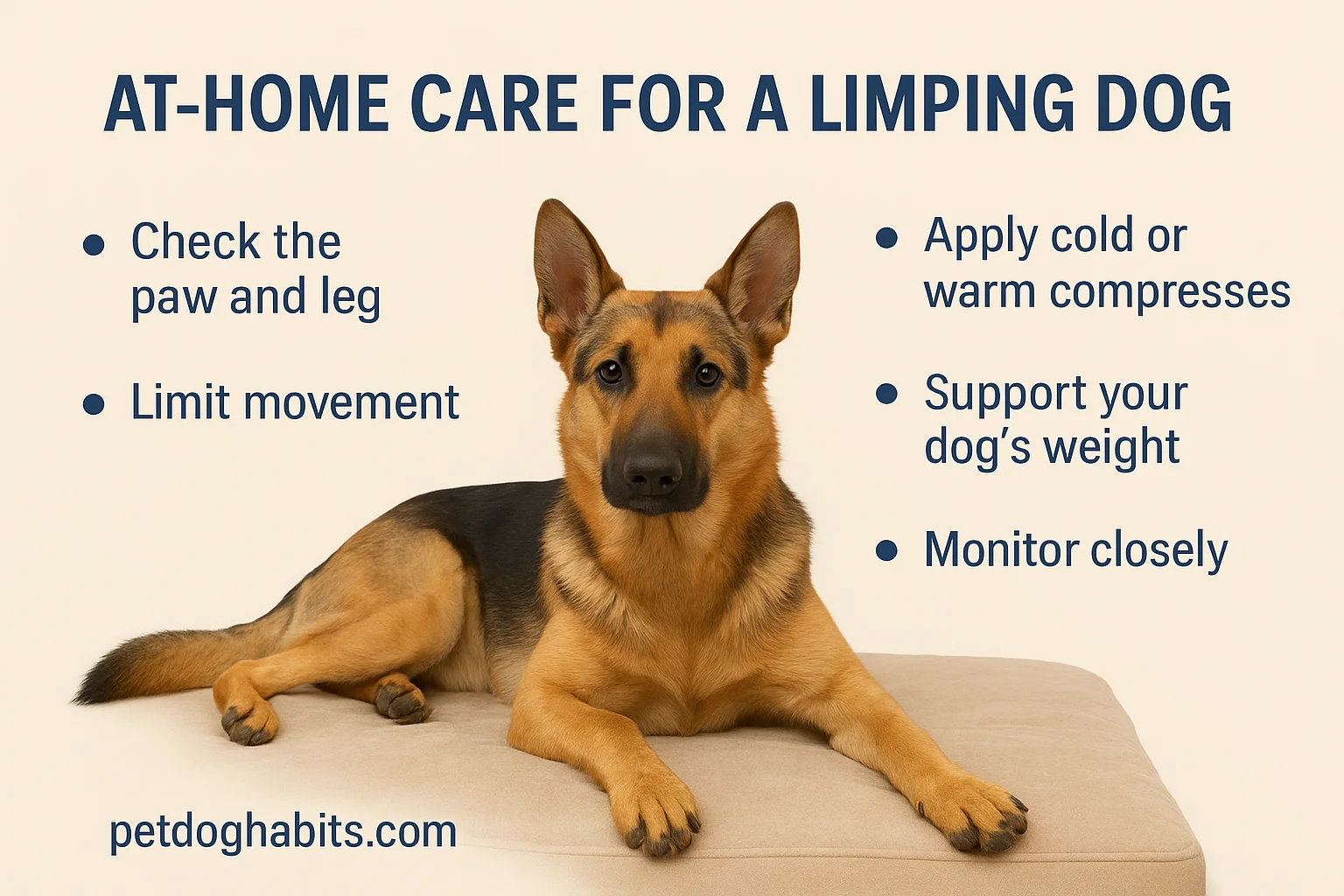
If your dog suddenly begins limping, it’s best to stay calm and act quickly. Here’s what you can do before heading to the vet:
- Check the Paw and Leg
Look for cuts, debris, insect bites, or swelling. Remove any visible thorns or splinters gently. - Limit Movement
Prevent your dog from running, jumping, or climbing stairs. Use a leash when going outside. - Apply Cold or Warm Compresses
- Use a cold compress for recent injuries or swelling (10–15 minutes).
- A warm compress may help soothe stiffness in chronic cases.
- Support Your Dog’s Weight
Small dogs can be carried, while large dogs may benefit from a towel or blanket sling for support. - Monitor Closely
If your dog is unable to put any weight on the leg or the limping persists for more than 24–48 hours, schedule a veterinary visit immediately.
For more emergency care guidance, visit VCA Animal Hospitals.
Sudden-Onset Causes of Back-Leg Limping
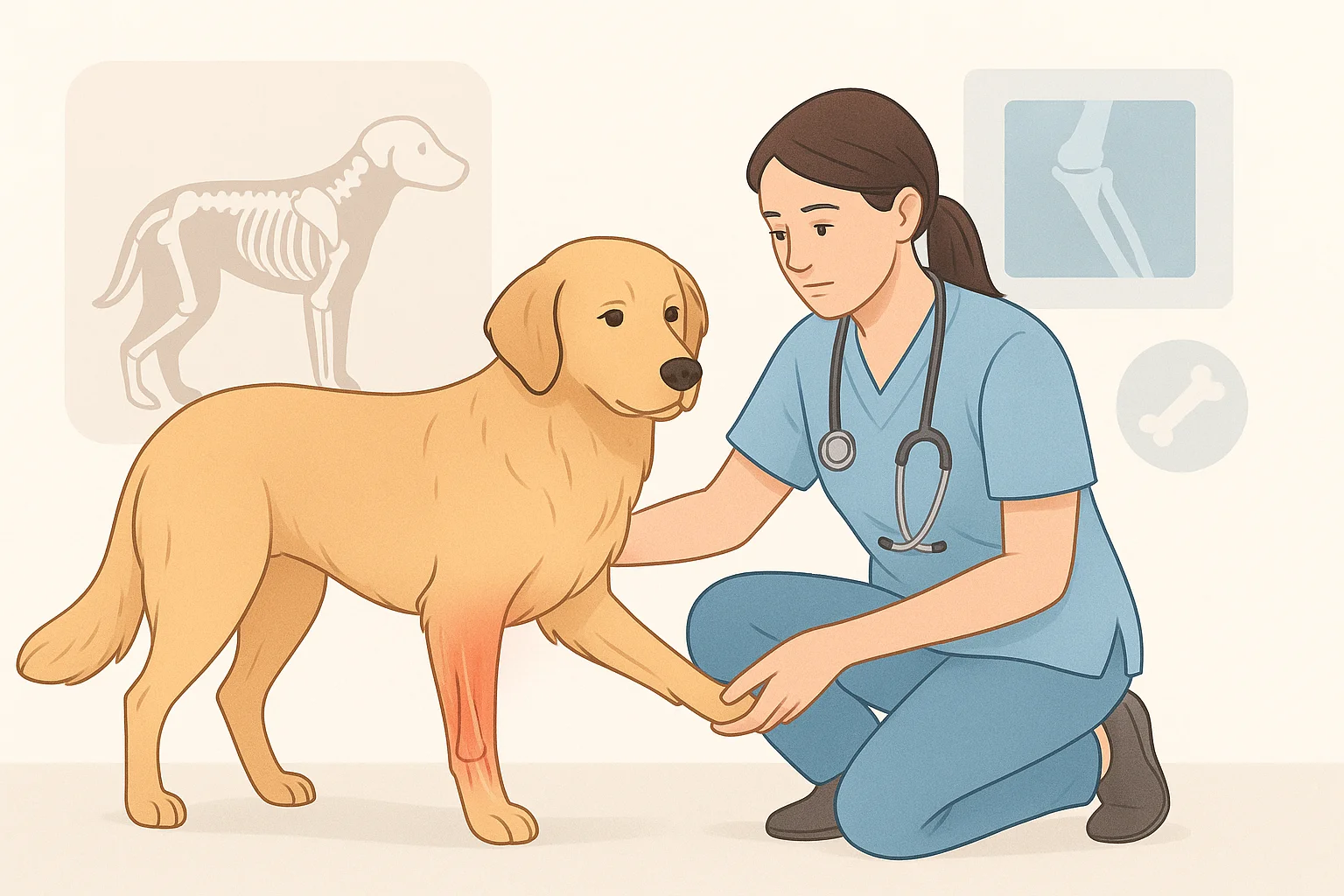
Some limps appear out of nowhere—often during playtime or a walk. Here are the most common acute causes:
- Torn Cranial Cruciate Ligament (CCL)
Similar to an ACL tear in humans, this injury causes sudden pain and instability in the knee joint. Surgery, such as TPLO or TTA, is often needed for full recovery. - Sprains, Strains, and Fractures
Rough play, jumping, or falls can lead to ligament injuries or broken bones. - Dislocations
Joints like the hip or knee can become dislocated after trauma, requiring immediate veterinary attention. - Paw Pad or Nail Injuries
A cracked nail, thorn, or piece of glass can make a dog refuse to walk on one leg. - Infections or Abscesses
A swollen, painful lump could be an abscess caused by a bite, scratch, or foreign object. - Tick-Borne Diseases
Conditions like Lyme disease often cause joint pain and limping, especially in the back legs.
Gradual or Chronic Causes of Limping
If your dog’s limp developed slowly or comes and goes, it might be due to a chronic health condition:
- Arthritis & Degenerative Joint Disease – Age-related wear causes stiffness and limping.
- Hip Dysplasia – A genetic issue that causes improper hip alignment, common in large breeds.
- Luxating Patella – The kneecap slips out of place, often seen in small breeds.
- Intervertebral Disc Disease (IVDD) – Spinal problems leading to hind-leg weakness or paralysis.
- Nerve Disorders (e.g., Degenerative Myelopathy) – Progressive nerve damage impacting mobility.
- Polymyositis or Muscle Disorders – Painful muscle inflammation can result in limping.
- Bone Tumors – Limping may be the first sign of bone cancer in some dogs.
If your dog’s limping is accompanied by vomiting, you should also check for other health concerns. For example, dogs throwing up white foam or vomiting yellow bile can indicate underlying health problems that may be linked to pain or illness.
When to Call the Vet
Don’t wait too long—seek professional help immediately if your dog:
- Cannot bear weight on a leg
- Shows severe swelling, heat, or bleeding
- Is crying or excessively licking one area
- Has additional symptoms like fever, loss of appetite, or lethargy
- Has limped for more than 48 hours without improvement
How Vets Diagnose Limping
To pinpoint the exact cause, your veterinarian may:
- Perform a physical exam and gait analysis
- Use X-rays, CT scans, or MRIs to check bones and soft tissue
- Conduct blood tests to screen for infection or tick-borne illnesses
This thorough approach ensures your dog gets the right treatment plan.
Treatment Options for a dog limping back leg:
Depending on the diagnosis, treatment may include:
- Rest and Medication – Anti-inflammatory drugs and pain relievers.
- Physical Therapy – Exercises, hydrotherapy, and massage to restore mobility.
- Surgery – For severe injuries like torn ligaments or fractures.
- Weight Management – Reducing pressure on joints to prevent further injury.
- Supplements – Glucosamine and omega-3 fatty acids for joint health.
- Alternative Therapies – Laser therapy, acupuncture, or stem-cell therapy.
For advanced treatment insights, check PetMD’s guide.
Home Care, Recovery, and Prevention
After treatment, you can support your dog’s recovery with:
- Comfortable orthopedic bedding
- Ramps and rugs to prevent slipping
- Gentle daily exercise to keep joints flexible
- Regular vet checkups and early intervention if limping returns
Conclusion
A dog limping on a back leg is a sign your furry friend needs help—whether it’s a simple paw injury or a more complex joint problem. Acting quickly, limiting movement, and seeking veterinary care ensures your dog’s pain is managed and prevents long-term damage.
By understanding the possible causes and treatment options, you’re better equipped to protect your dog’s health and mobility for years to come.

What Vegetables Can Dogs Eat? Safe and Unsafe Vegetables
Many vegetables are safe and healthy for dogs, but some can be dangerous. Learn what vegetables dogs can eat, what they can eat daily, and

Can Dogs Eat Anchovies? Benefits, Risks, and Safe Guide
Can dogs eat anchovies safely? Discover the benefits, risks, and proper way to feed anchovies to dogs. Learn how these small fish can support your

Can Dogs Eat White Chocolate? A Complete Safety Guide
Can dogs eat white chocolate or is it dangerous? Discover the risks, symptoms of chocolate poisoning, and what to do if your dog eats white