
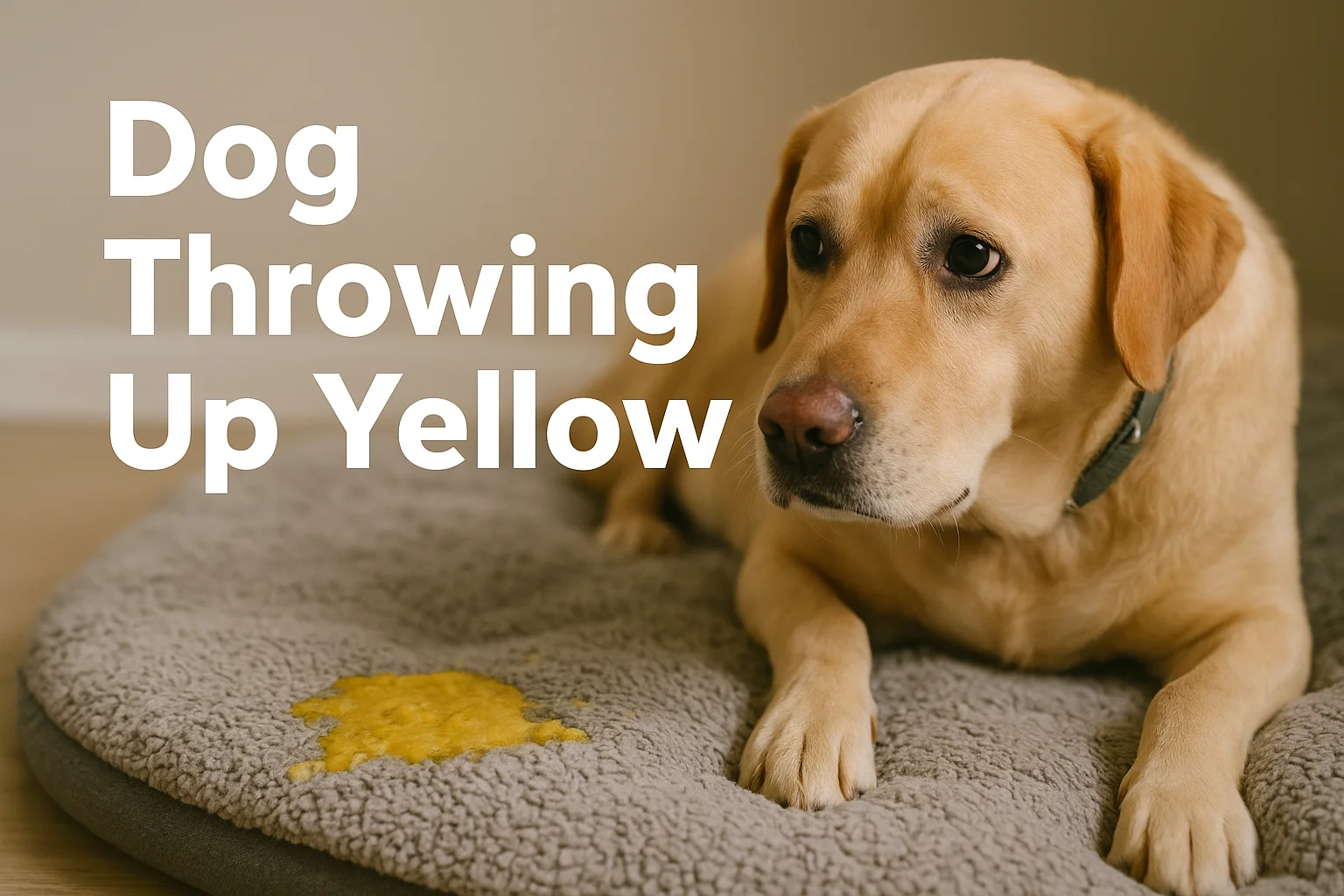
Seeing your dog throwing up yellow bile can be alarming. As a pet parent, you want to know if it’s something minor—like an empty stomach—or if it’s a sign of a serious health problem. The good news is that vomiting yellow isn’t always an emergency. However, understanding why your dog is throwing up yellow and knowing when to call your vet can make all the difference in your pup’s health and comfort.
In this comprehensive guide, we’ll cover:
- What yellow vomit actually means
- Common, moderate, and serious causes
- Simple at-home care steps
- When to see a vet immediately
- Prevention strategies to keep your dog healthy
Why Is My Dog Throwing Up Yellow?
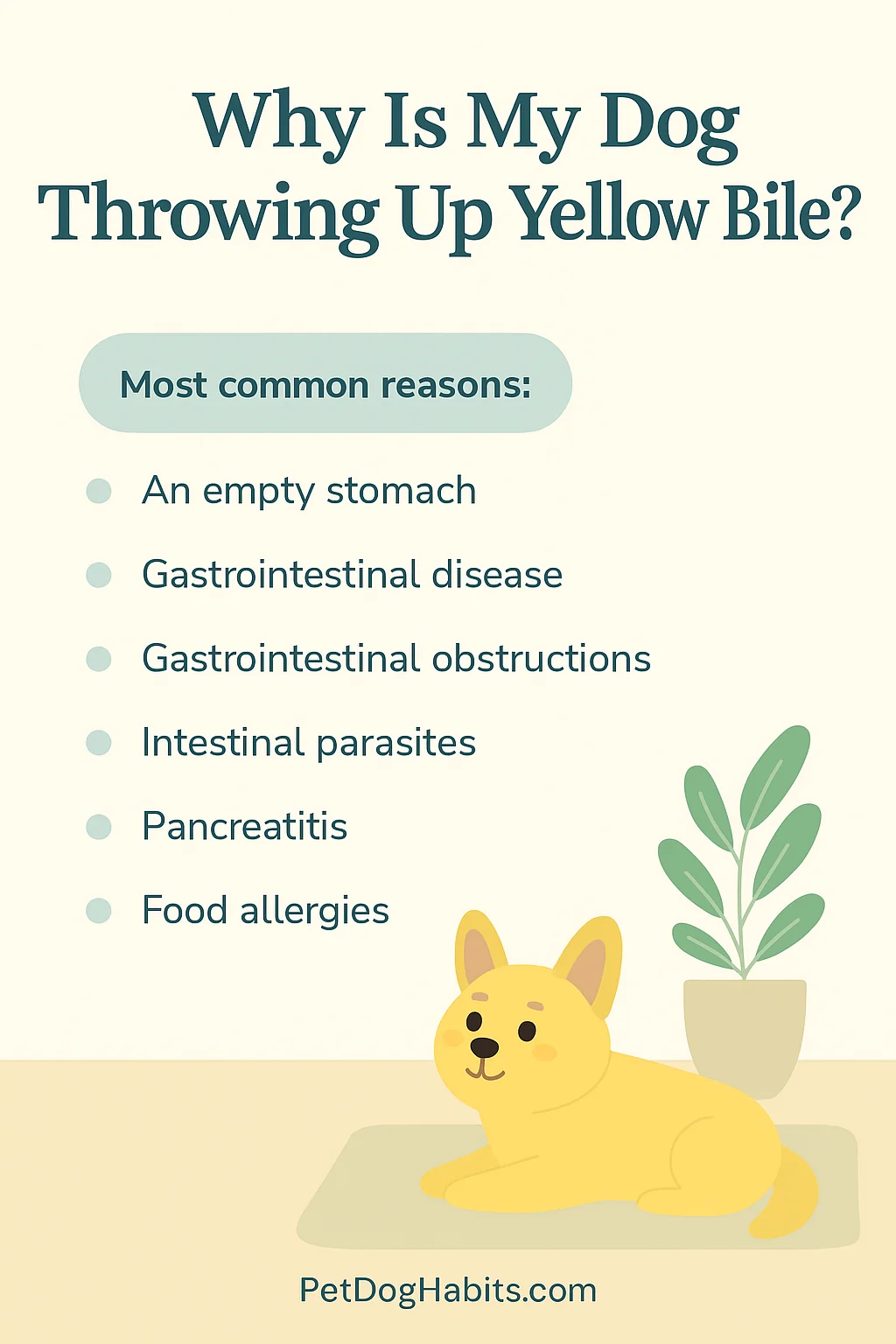
Yellow vomit is usually bile, a digestive fluid that helps break down fats. Unlike food-based vomit, bile is a yellow or yellow-green liquid produced in the liver and stored in the gallbladder. When your dog vomits bile, it’s often because their stomach is empty, irritated, or dealing with another underlying issue.
Understanding this color clue is your first step to deciding whether your pup needs a little TLC at home—or urgent vet care.
Common Causes of Dog Throwing Up Yellow (Often Manageable at Home)
1. Bilious Vomiting Syndrome (BVS)
One of the most frequent reasons for yellow vomit is bilious vomiting syndrome. This happens when your dog’s stomach stays empty for too long, allowing bile to irritate the stomach lining. Dogs with BVS often vomit early in the morning or late at night.
What to do:
- Feed smaller, frequent meals to avoid long gaps between feedings.
- Offer a small bedtime snack to help maintain stable bile levels overnight.
Reference: PetMD
2. Empty Stomach or Mild Indigestion
If your dog skipped a meal or has an irregular eating schedule, their stomach acid can build up and cause vomiting. Mild stomach upset often resolves with a proper feeding routine and rest.
3. Minor Dietary Indiscretion
Dogs love exploring—sometimes that means eating grass, crumbs, or something from the trash. This can irritate their stomach and lead to a one-off episode of yellow vomit. Keep an eye on them, but if they seem fine afterward, it’s rarely a reason to panic.
Moderate Causes of Dog Throwing Up Yellow (Monitor Closely)
4. Food Allergies or Sensitivities
Some dogs are sensitive to specific ingredients like beef, chicken, dairy, or grains. These sensitivities can lead to intermittent vomiting, diarrhea, or itchy skin.
Pro Tip: Consider a food trial with limited-ingredient or hypoallergenic diets to pinpoint the trigger.
Reference: The Spruce Pets
5. Mild Gastrointestinal Upset
Stress, sudden food changes, or minor infections may irritate your dog’s digestive system. These issues often improve within a day or two with gentle care, hydration, and bland food.
Serious Causes of Dog Throwing Up Yellow (Vet Attention Needed)
6. Pancreatitis
Pancreatitis is a painful inflammation of the pancreas, often triggered by fatty foods. Along with vomiting bile, dogs may show:
- Loss of appetite
- Diarrhea
- Lethargy
- Abdominal pain
This condition can be life-threatening and requires prompt veterinary care.
Source: PetMD
7. Intestinal Blockage
If your dog swallowed a toy, bone, or sock, it can block their intestines, causing yellow vomit, bloating, and severe discomfort. An intestinal blockage is an emergency—don’t wait.
Source: The Spruce Pets
8. Addison’s Disease & Other Systemic Illnesses
Conditions like Addison’s disease, kidney disease, or liver disease often cause bile vomiting, lethargy, and pale gums. If you notice these symptoms, visit your vet right away.
Read more about spotting serious health issues in our guide: Pale Gums in Dogs: Causes, Emergency Signs, and What Every Dog Owner Should Know.
9. Poisoning or Toxin Exposure
If your dog ingested cleaning supplies, toxic plants, or spoiled food, vomiting bile can be an early warning sign. Call your vet or a pet poison hotline immediately.
Source: GSVS
Home Care Tips for a Dog Throwing Up Yellow
If your dog seems otherwise healthy and only vomited once or twice, you can try these steps at home:
- Offer a Calm, Restful Space
Keep your pup comfortable and stress-free in a quiet environment. - Hydrate Carefully
Offer small sips of water. If they vomit it up, wait 1–2 hours before trying again. - Withhold Food Briefly
Skip food for 2–4 hours, then slowly reintroduce bland meals like boiled chicken and rice. - Small, Frequent Meals
Feed multiple times a day to prevent bile build-up. - Late-Night Snack Strategy
For BVS dogs, a bedtime snack helps prevent their stomach from staying empty for too long. - Track Symptoms
Keep a vomit log: note the time, color, and frequency. This helps your vet make a faster diagnosis if needed.
Want to learn more about digestive issues? Read our related guide: Dog Throwing Up White Foam: Causes, Treatment & Vet Advice.
Red Flags: When to Call the Vet Immediately
Call your veterinarian if you see any of these warning signs:
- Vomiting multiple times a day
- Blood in vomit or stool
- Abdominal bloating or pain
- Lethargy or weakness
- Refusal to eat or drink for 24 hours
- Signs of dehydration (sunken eyes, dry gums)
Prompt vet care can prevent complications and save lives.
Preventing Yellow Vomit Episodes
Prevention is always better than treatment. Here’s how to reduce future vomiting episodes:
- Keep a consistent feeding schedule
- Avoid fatty or spicy table scraps
- Supervise outdoor play to prevent scavenging
- Use secure trash cans to block access
- Gradually introduce new foods over 7–10 days
- Schedule regular check-ups and deworming
These simple steps not only reduce vomiting but also promote your dog’s long-term health.
Preparing for a Vet Visit
If your dog needs a vet evaluation, bring this info:
- Vomit log (timing, frequency, color)
- Recent diet changes
- Possible exposure to toxins or foreign objects
- Medications or supplements
Vets may recommend X-rays, blood tests, or ultrasounds to determine the cause.
Yellow foam often means your dog’s stomach is empty, and they’re vomiting bile. If it often happens, see a vet.
This usually happens when your dog hasn’t eaten in a while. Frequent bile vomiting needs vet attention.
Yellow vomit is mostly bile from an empty stomach. Ongoing vomiting may signal stomach issues.
Vomiting with diarrhea can indicate infection or digestive problems. Contact your vet promptly.
This is often bile mixed with stomach fluid from fasting. If persistent, seek veterinary care.
Conclusion:
F
A dog throwing up yellow isn’t always an emergency. Often, it’s due to an empty stomach or minor irritation. However, repeated vomiting or additional symptoms mean it’s time to see your vet. By staying observant, keeping a symptom log, and following preventive feeding strategies, you can protect your dog’s health and catch problems early.
Remember, as a pet parent, you know your dog best. If something feels off, trust your instincts and reach out for professional advice.

What Vegetables Can Dogs Eat? Safe and Unsafe Vegetables
Many vegetables are safe and healthy for dogs, but some can be dangerous. Learn what vegetables dogs can eat, what they can eat daily, and
Can Dogs Eat Anchovies? Benefits, Risks, and Safe Guide
Can dogs eat anchovies safely? Discover the benefits, risks, and proper way to feed anchovies to dogs. Learn how these small fish can support your

Can Dogs Eat White Chocolate? A Complete Safety Guide
Can dogs eat white chocolate or is it dangerous? Discover the risks, symptoms of chocolate poisoning, and what to do if your dog eats white
[…] you should also check for other health concerns. For example, dogs throwing up white foam or vomiting yellow bile can indicate underlying health problems that may be linked to pain or […]
Comments are closed.