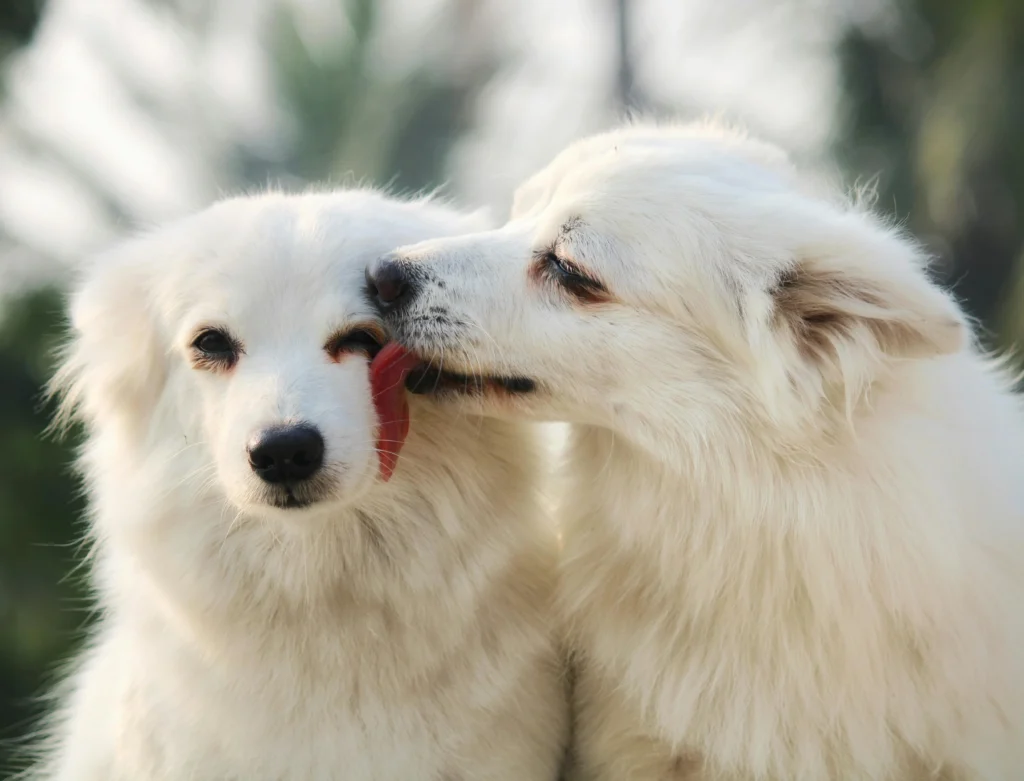
Whether it’s a gentle moment between playmates or a behavior you’ve found a bit concerning, ear-licking is more than just a random act—it’s packed with emotional, social, and even medical significance.
Understanding why dogs lick each other’s ears can help you better care for your pet’s emotional and physical health. It can even serve as an early warning sign of infection or discomfort. Let’s explore what this behavior means and how your dog’s diet, especially fresh pet food, may influence it.
What Does It Mean When Dogs Lick Each Other’s Ears?
1. Grooming & Hygiene
Dogs can’t easily clean their ears, so ear-licking is often a form of helpful grooming. It removes dirt, wax, and even microscopic debris. Dog saliva contains natural enzymes like lysozyme, which have antimicrobial properties that can support cleanliness.
2. Social Bonding and Pack Behavior
Ear-licking isn’t just about hygiene—it’s a sign of trust. In pack behavior, licking is used to show submission or affection. A dog licking another’s ears might be showing respect, nurturing a bond, or maintaining peace within the group.
3. Emotional Comfort
Dogs may lick to self-soothe during stressful moments, and this action can extend to comforting their fellow pets. Licking a companion’s ears during times of anxiety can be calming for both dogs involved.
4. Curiosity and Taste
Believe it or not, dogs may like the taste of earwax, which contains salty and fatty compounds. This sensory curiosity is natural, especially among puppies and younger dogs, as they learn about the world through taste and scent.
5. Detecting Infection or Discomfort
One of the most overlooked reasons for ear-licking is that dogs might sense a problem. Increased licking can be a sign of an underlying ear infection, irritation, or inflammation. If one dog is obsessively licking the other’s ear, it may be time for a vet visit.
How Diet Affects Dog Ear Health and Behavior:
Diet plays a powerful role in your dog’s skin, coat, immune health, and even behavior. Many issues that lead to excessive ear licking—like inflammation, allergies, and infection—are influenced by nutrition.
Why Fresh Pet Food is Better for Your Dog’s Ears
Most commercial kibble is highly processed and contains preservatives, fillers, and byproducts that can trigger food sensitivities. In contrast, fresh pet food—which is gently cooked or raw—offers clean, bioavailable nutrients.
Key benefits of feeding fresh food to dogs include:
- Reduced skin allergies and itchiness
- Healthier ears with fewer infections
- Improved coat condition
- Stronger immune response
- Fewer behavioral problems caused by discomfort or itching
A healthy dog with balanced nutrition is far less likely to display compulsive licking behaviors linked to discomfort or stress.
F
When Should You Worry About Ear Licking?
Occasional ear-licking is completely normal, but excessive or obsessive licking should raise a flag. Watch out for:
- Foul-smelling ears
- Redness or inflammation
- One dog is constantly licking another
- Visible discomfort or whining
In such cases, it’s important to consult your veterinarian and review your dog’s diet and environment.
How to Stop Excessive Dog Licking Naturally?
If ear-licking becomes a problem, there are natural ways to manage and reduce it:
- Enrich your dog’s routine with toys, lick mats, and puzzles
- Switch to a fresh or limited-ingredient diet
- Create calming routines to reduce anxiety
- Check ears weekly for signs of infection
- Groom regularly to avoid a buildup that encourages licking
These strategies not only curb excessive licking but also support your pet’s mental and physical well-being.
Conclusion – Small Behavior, Big Meaning:
Ear licking may look odd, but it’s your dog’s way of showing affection, curiosity, and sometimes concern. By understanding the emotional and physical drivers behind this behavior—and by feeding a nutrient-rich, fresh diet—you can promote not only better hygiene but also a more balanced, happy pet.
So next time you catch your pup in the act, pause and ask: Is it just affection, or is it time to take a closer look?
Have you ever caught your dog licking another’s ears too much? What did you do about it? Share your thoughts in the comments below!

What Vegetables Can Dogs Eat? Safe and Unsafe Vegetables
Many vegetables are safe and healthy for dogs, but some can be dangerous. Learn what vegetables dogs can eat, what they can eat daily, and

Can Dogs Eat Anchovies? Benefits, Risks, and Safe Guide
Can dogs eat anchovies safely? Discover the benefits, risks, and proper way to feed anchovies to dogs. Learn how these small fish can support your

Can Dogs Eat White Chocolate? A Complete Safety Guide
Can dogs eat white chocolate or is it dangerous? Discover the risks, symptoms of chocolate poisoning, and what to do if your dog eats white
[…] behaviors such as ear licking between dogs may also play a role. In fact, our detailed guide on why dogs lick each other’s ears explains how grooming can sometimes introduce bacteria if one dog’s mouth carries […]
Comments are closed.